
Malaysia·George Town·Destination
3 Days in George Town: Street Art, Food & Heritage
·✓ facts checked August 2026
Three days covers the heritage core, the murals, the jetties and Penang Hill. It's the exact route we walked, with tickets, timings and where we slept.
before you go —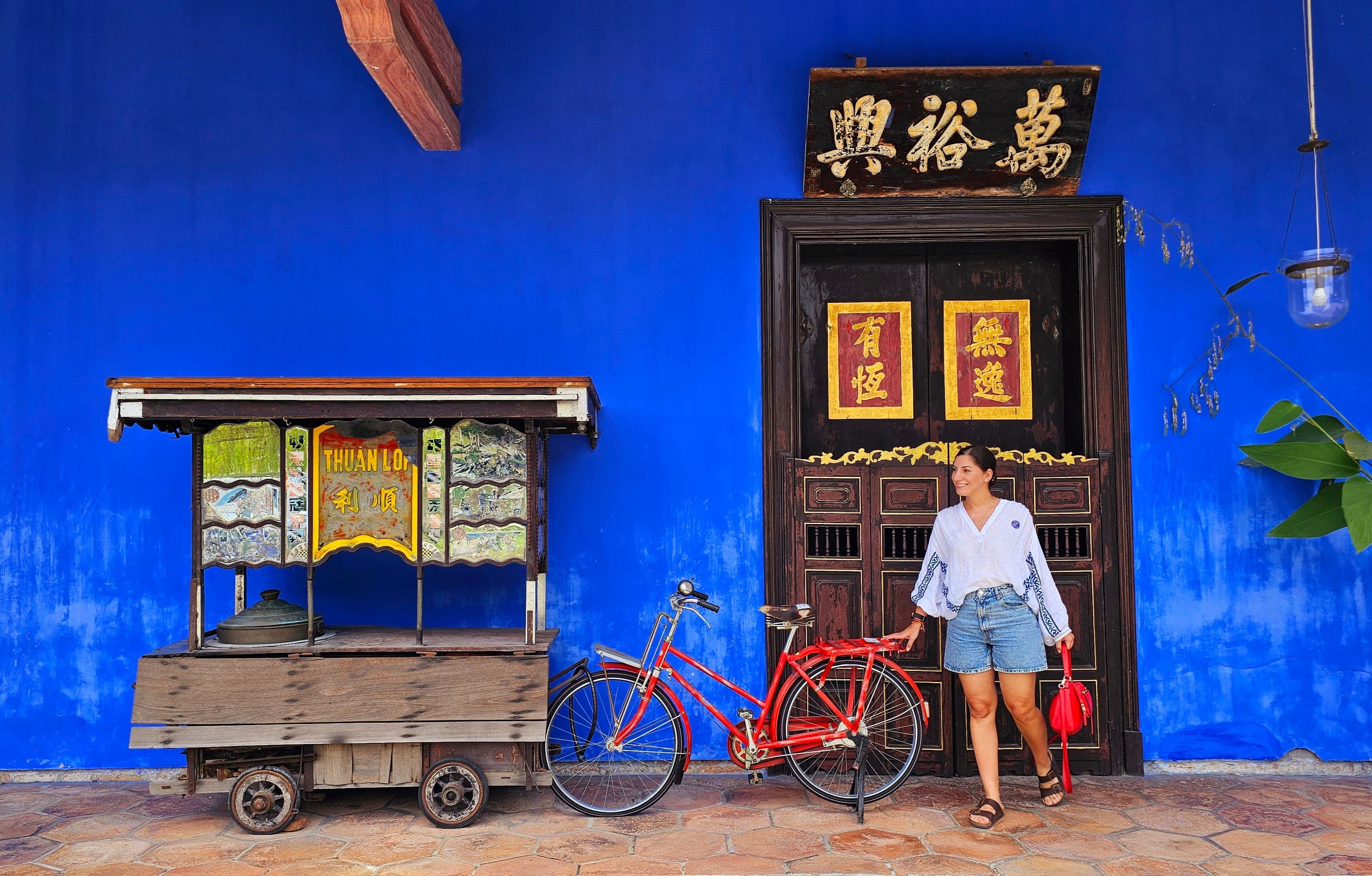
When to come
Dry, low humidity, clear skies — best for exploring the UNESCO core on foot.
Warm, humid, less crowded; start early to beat the heat. I went in March, and it was HOOOTTT & HUMID.
Afternoon showers come and go. It's also durian season, with June and July the busiest time around Balik Pulau.
Monsoon season. September can also be hazy, so check the air quality before planning a Penang Hill sunrise.
I often find myself gushing about Penang, gushing about the smell of char kway teow, the sound of a temple bell, and the shock of blue at first sight of the Blue Mansion.
George Town is a small city on Penang Island where Chinese, Indian, and Malay life have sat on top of each other for two hundred years of trade. Three days is enough for the heritage core, the murals, the jetties and the hill. It deserves longer, and most of us do not have longer.
Some links in this guide are affiliate links. If you book through them we may earn a small commission, at no extra cost to you — we only point to options we’d use ourselves.
Your 3 days at a glance
here's the shape of itIs 3 days in George Town enough?
Yes. Three days cover the heritage core, the street art, the jetties, and the Penang Hill to Kek Lok Si day without feeling rushed. What a fourth day buys you is the slower stuff: morning markets, the beach, a trip out to Balik Pulau.
We based ourselves in the heritage quarter and walked to every stop on the first two days. As a woman, I felt safe walking around the heritage area at dawn and at night. I think that says most of what you need to know about safety here. Our George Town stay picks are further down if you'd rather sort your bed out first.
Here's the whole route on one map. Every stop below is pinned, so you can see how the three days fit together before you start.
George Town 3-Day Route
Days 1 and 2 are easy to do on foot, but you don't have to walk every step. George Town's free CAT shuttle runs every twenty minutes from 6 AM to midnight and stops close to most of the places in this itinerary, including Fort Cornwallis, Armenian Street, Weld Quay and Khoo Kongsi. It's air-conditioned, it costs nothing, and we were glad of it by the time the afternoon heat caught up with us.
Day 1 — Heritage core
The Mugshot CaféBlue MansionFort CornwallisPinang Peranakan
Mugshot Café
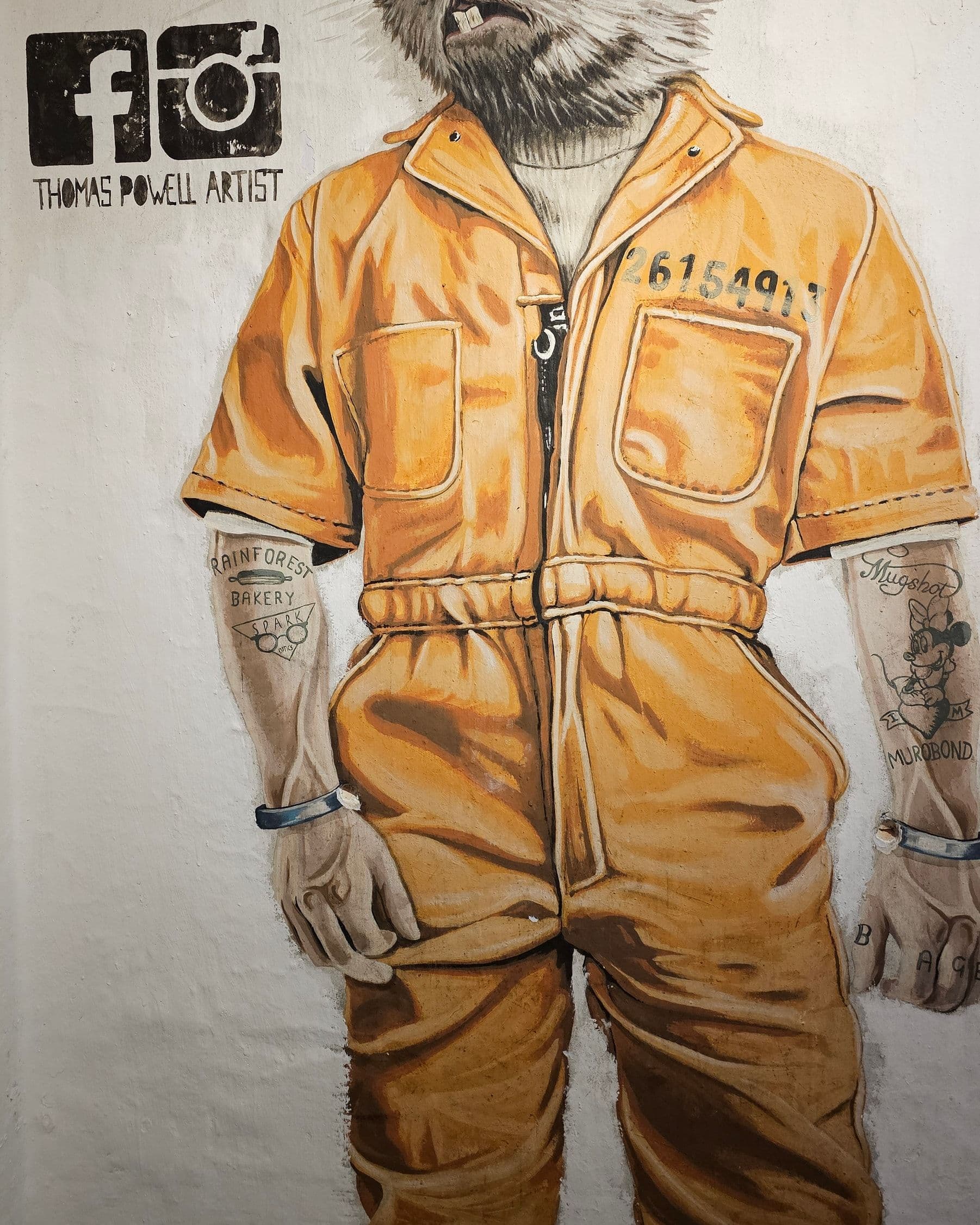
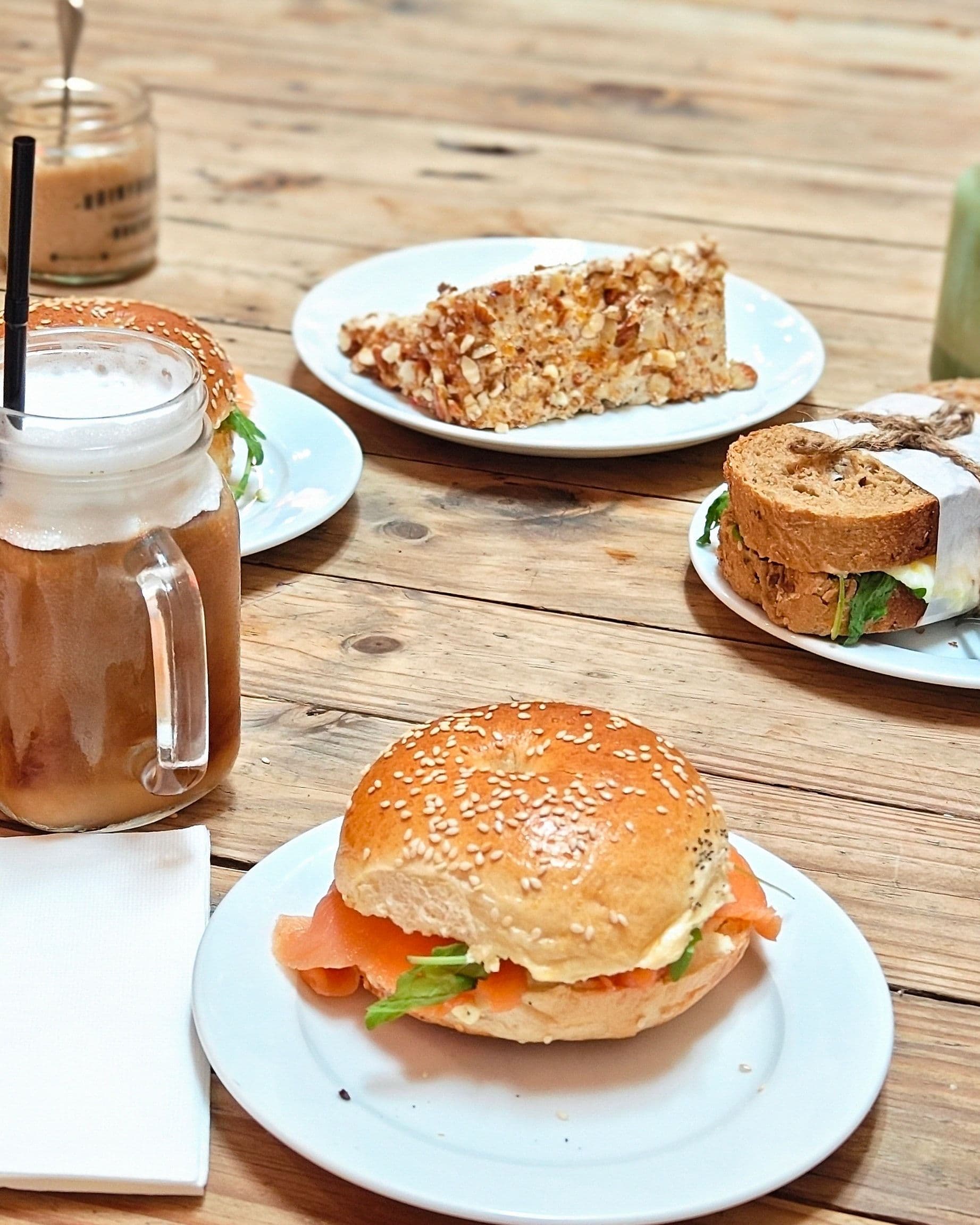
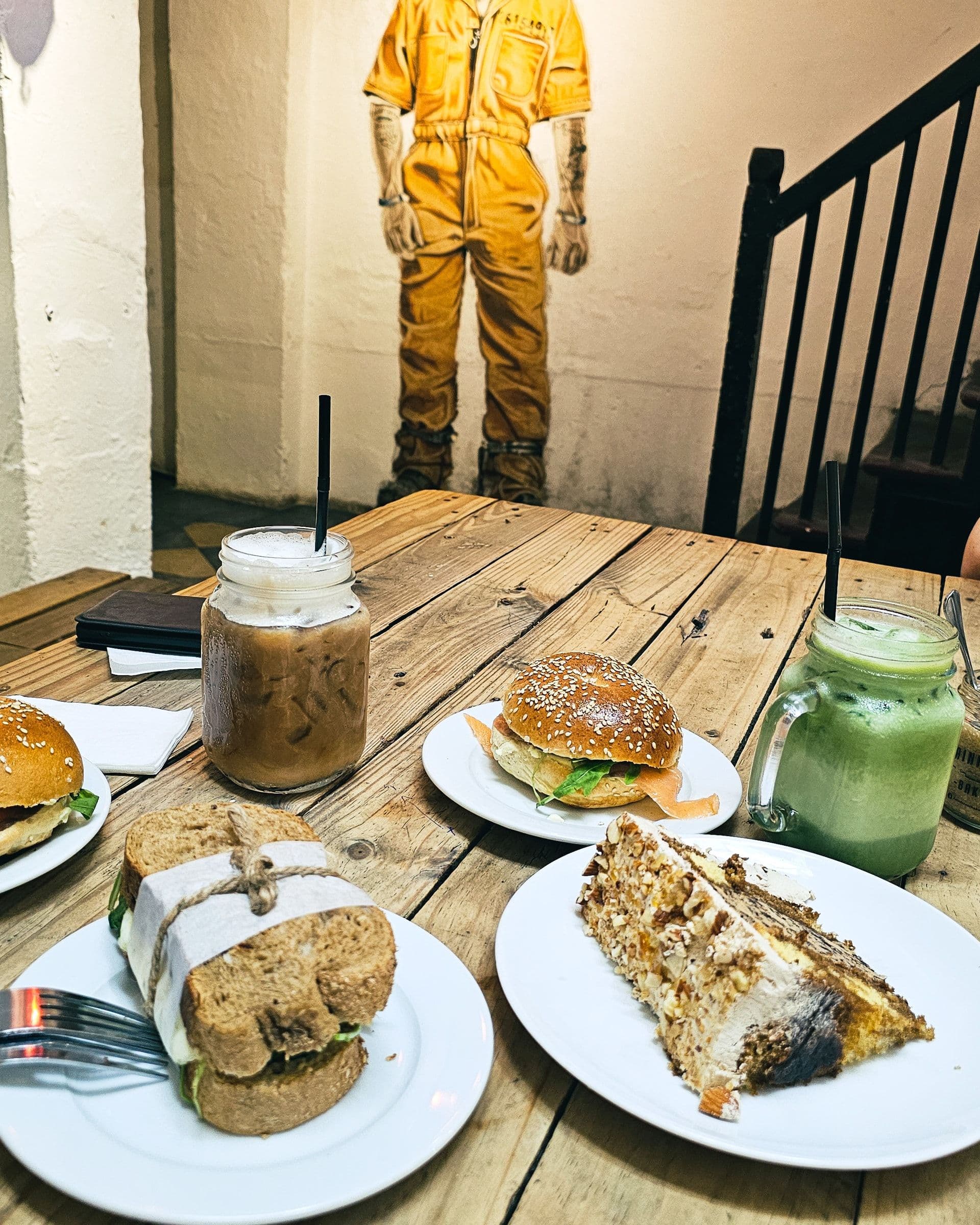
breakfastStart at The Mugshot Café on Chulia Street, for the coffee but mostly for the wood-fired bagels. We had ours with cream cheese, and it set the whole day up. Arrive early on weekends, before the queue builds. It's nicely decorated with books, photographs, and eccentric paintings on the walls. The café is fairly long, with wooden chairs and tables at the far end.
The Blue Mansion
11 AM tourHead to the Cheong Fatt Tze Mansion for the 11 AM tour. If you have time, admire or step into the heritage shophouses on Muntri Street. (I came back a few times to this heritage-street quarter just for the shopping and the colourful architecture.)
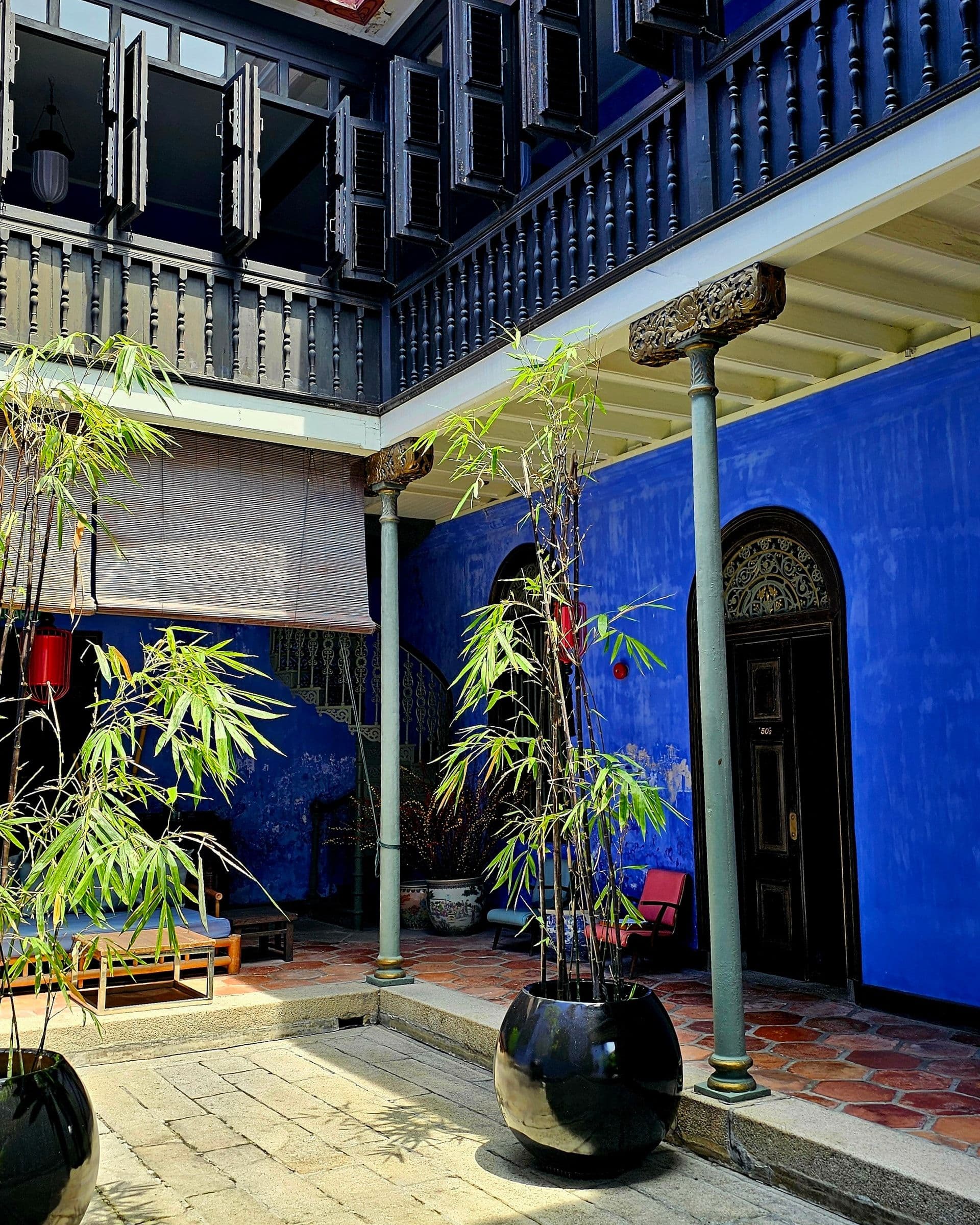
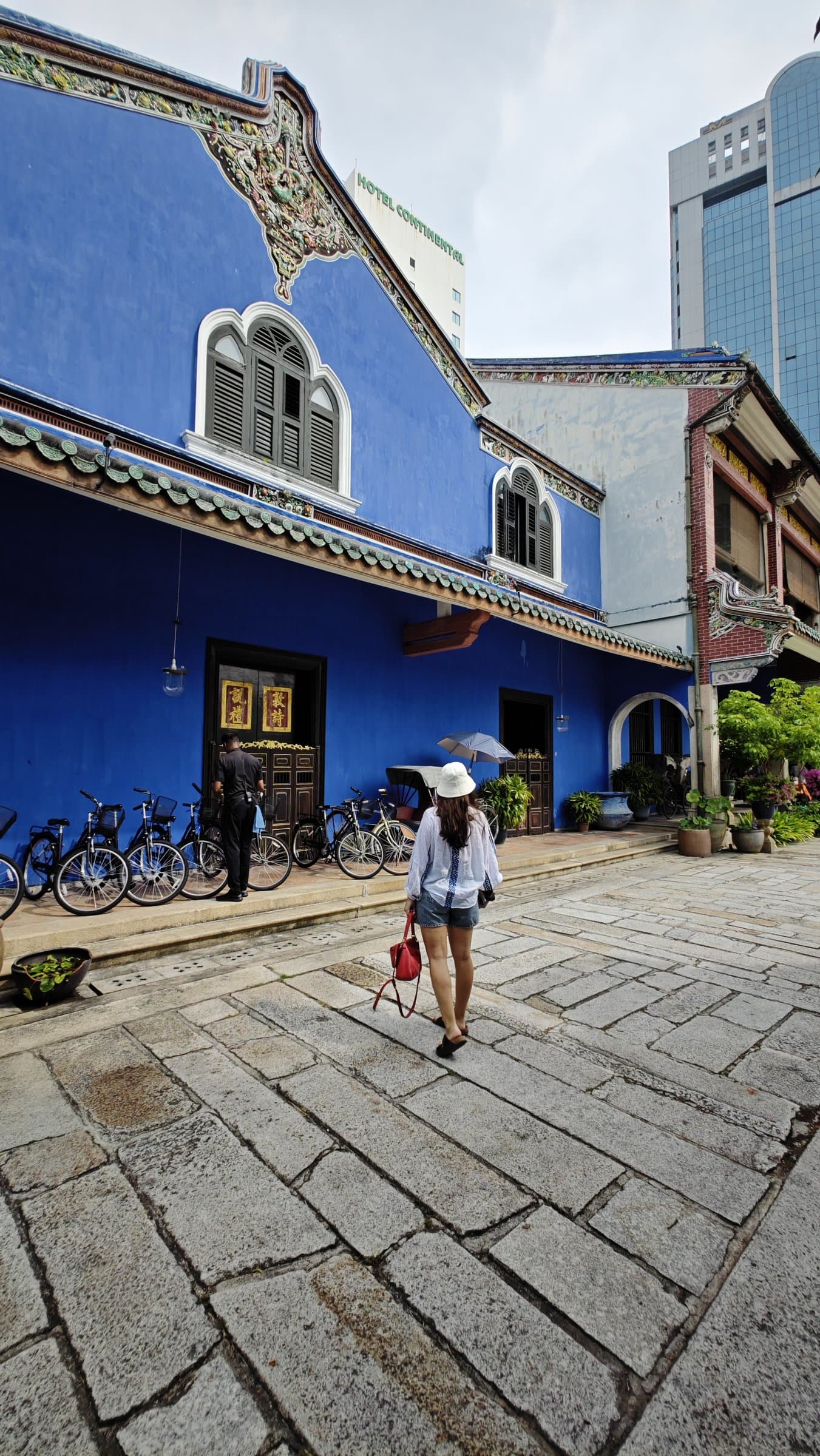
The Cheong Fatt Tze Mansion, known as the Blue Mansion for its bright blue walls, is perhaps the most famous heritage building in the city, and it took the UNESCO Most Excellent Project award for conservation in 2000. The Chinese merchant Cheong Fatt Tze, "the Rockefeller of the East," built it at the end of the 19th century, and a six-year restoration brought back the European and Chinese detailing that sits in the same rooms today.
You come in off Leith Street and the traffic stops being your problem. Up close the blue isn't the flat block it photographs as: it's lime wash, chalky and streaked where the courtyard sun lands on it, several shades deeper along the shaded walkway. The house has 220 windows, which stops being a number about five minutes in and starts being the reason you can see anything indoors at all.
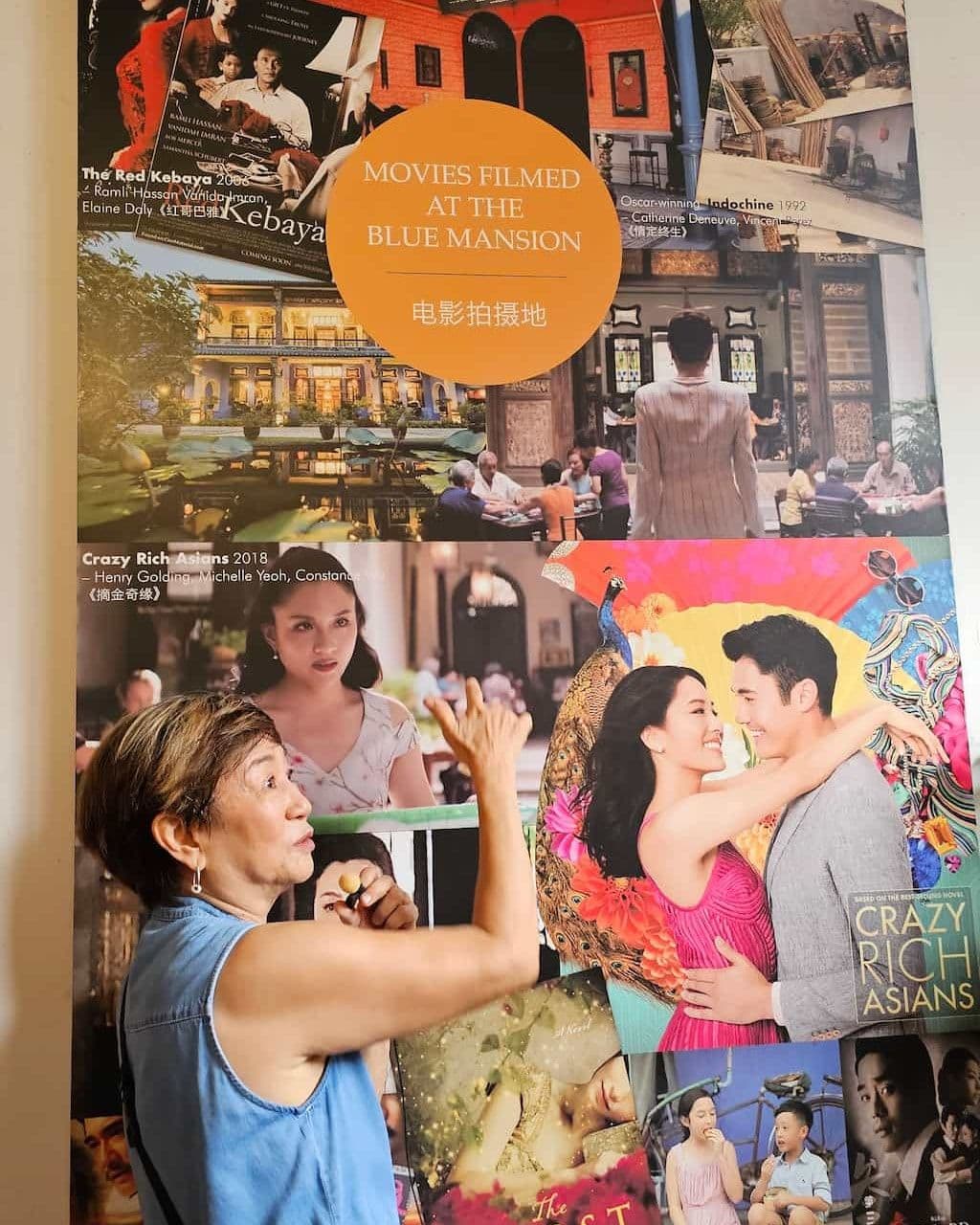
Loh-Lim Lin Lee took our group, and she doesn't walk and recite. She stops, gets an arm up, and waits until you've looked at the thing. She had us at the board by the entrance that lists the films shot here, Crazy Rich Asians last on it under two I hadn't heard of, and I got the distinct sense the movies were not the part she cared about.
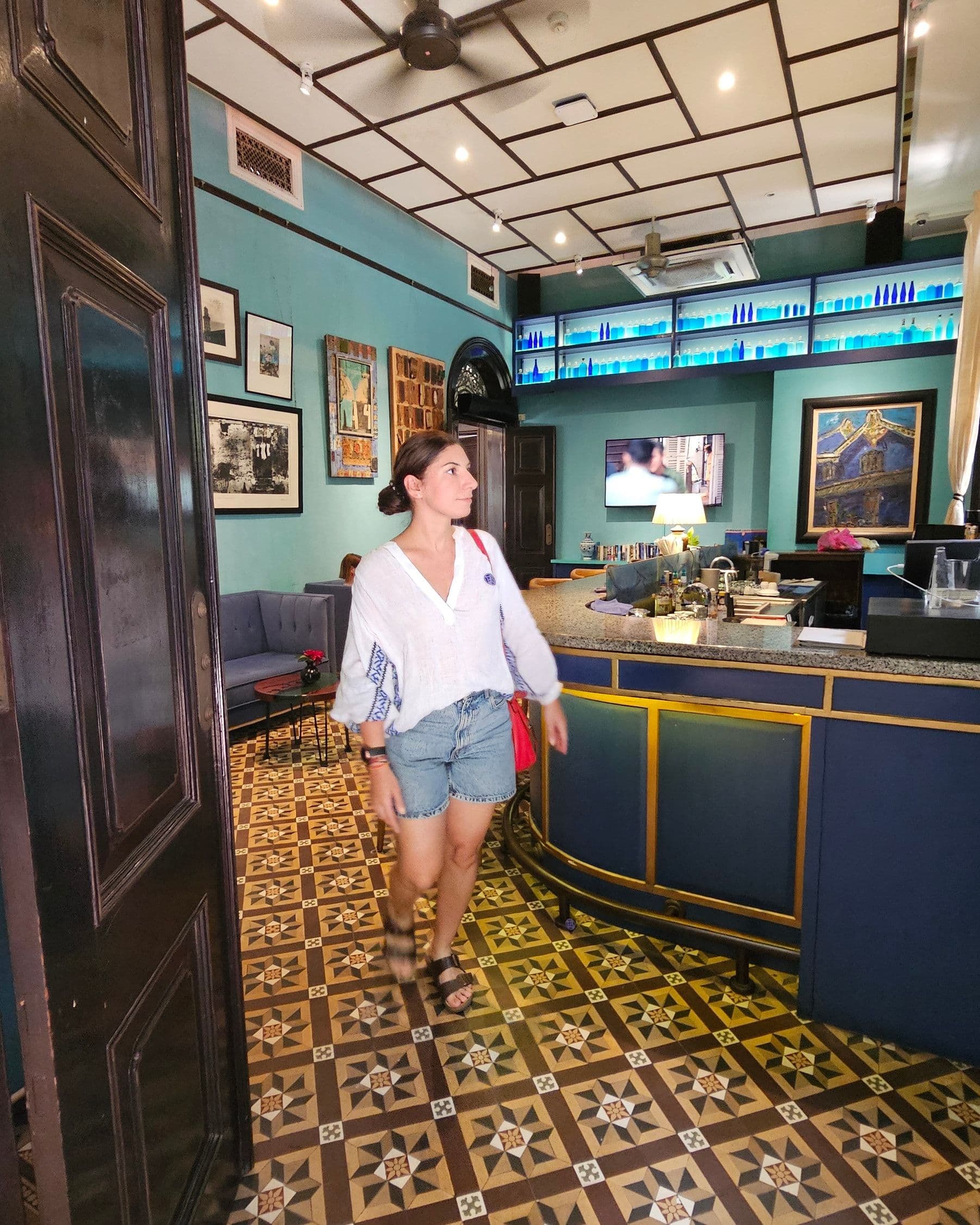
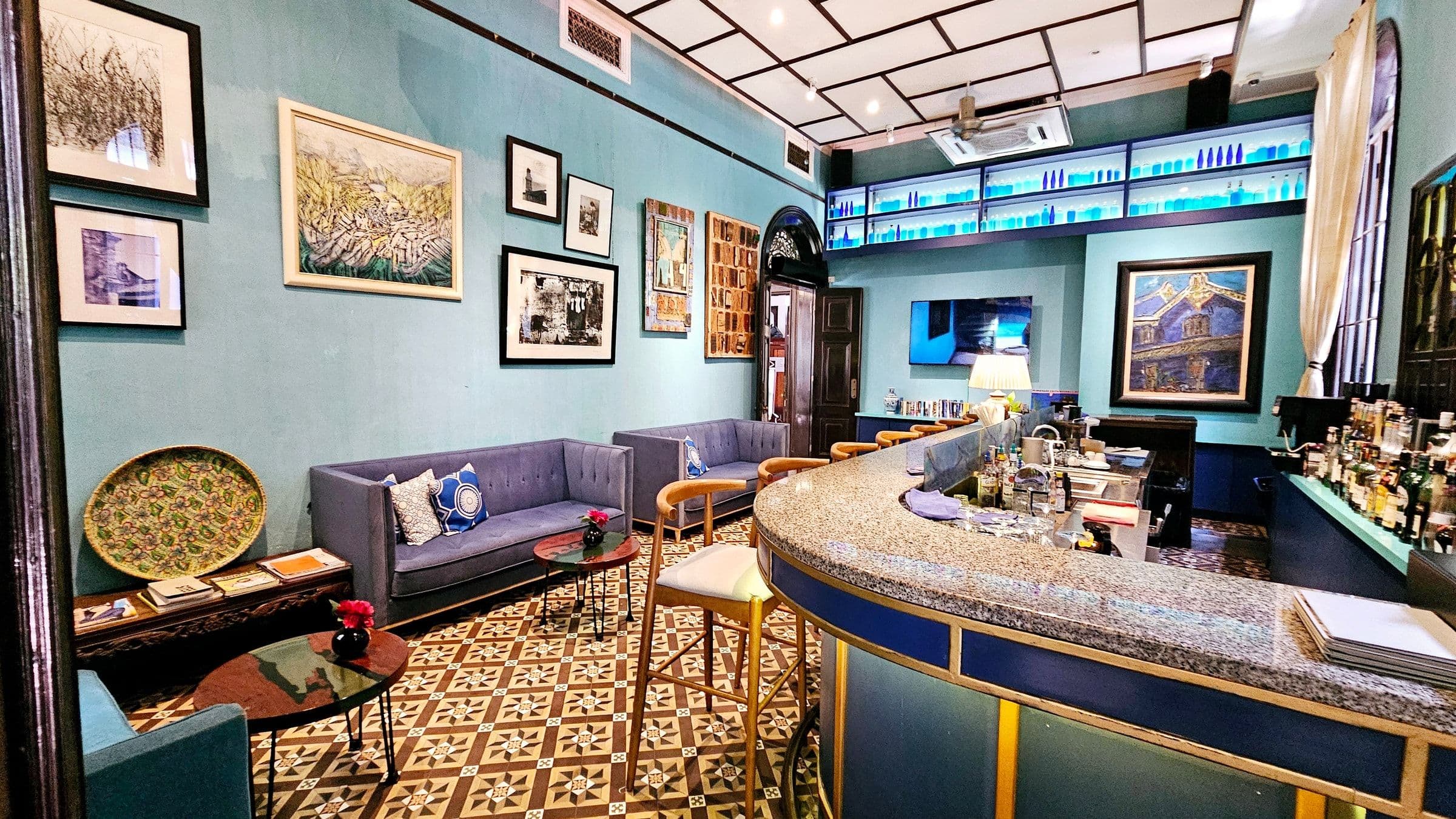
Forty-five minutes sounds short and is. We got moved through the courtyards at a clip and I'd have taken another ten in the second one, just watching the blue shift on the far wall as the sun came round. The consolation is that the bar is right there when you're done: teal walls, a granite counter, a shelf of backlit blue bottles doing the obvious joke. Part of the mansion is a boutique hotel and closed to visitors, and whether that side is worth the money I weigh up in where to stay.
If the guided tours don't fit your plans, you can still visit on the self-guided audio tour. I'd treat it as a backup rather than the main event, but it's a good way to get inside if the scheduled tours don't work.
Fort Cornwallis
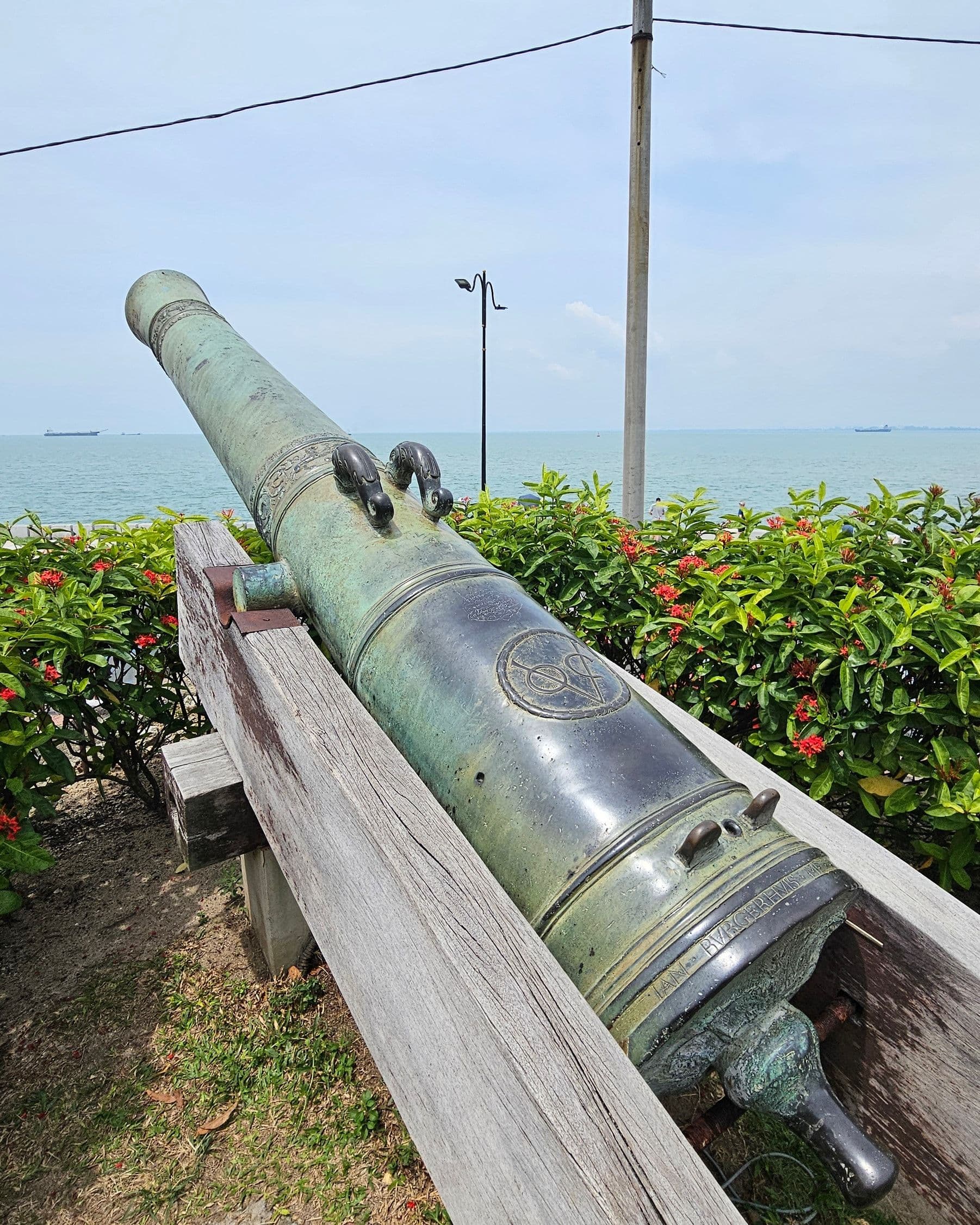
2 PMIf you're keen on Penang's colonial history, Fort Cornwallis is a good place to start: you'll learn about one of the events that shaped the island, when the British arrived and began building a fort on the north-eastern tip of Penang Island. It's a good idea to take one of the guided tours if it coincides with your visit. That way you'll learn about the colonial past and the fort, and won't leave with the impression that you've just seen some rocks. There's nothing to book here. Buy your ticket at the entrance and wander the grounds for an hour or so. A beer is included in the ticket, served at the rooftop terrace bar.
The Pinang Peranakan Mansion
4:30 PMThe Pinang Peranakan Mansion is a 19th-century Chinese home that belonged to an affluent family, the Chinese Kapitan Chung Keng Kwee. It's a museum now, and I think it's really about seeing how a very rich Straits Chinese family actually lived: what they ate off, what they wore, what they hung on the walls. I'd give it about an hour. If you can, time your visit for the free 4:30 PM English tour, because a lot of what's in the display cases doesn't mean much until someone explains the stories behind it. The Peranakans created a unique lifestyle and customs by adopting selected practices from the local Malays and the colonial British. The house features an eclectic style: Chinese carved-wood panels, English floor tiles, and Scottish ironwork.
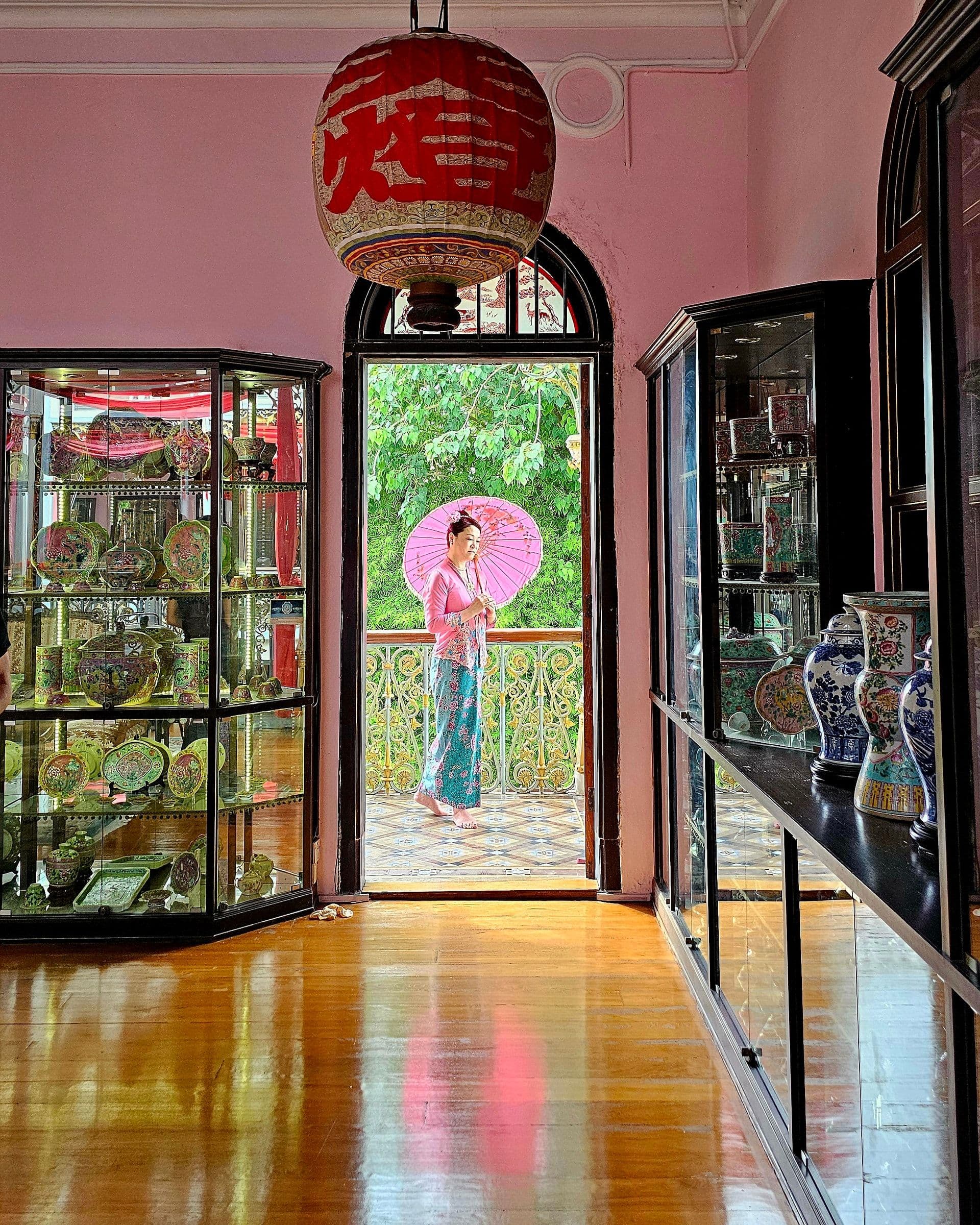
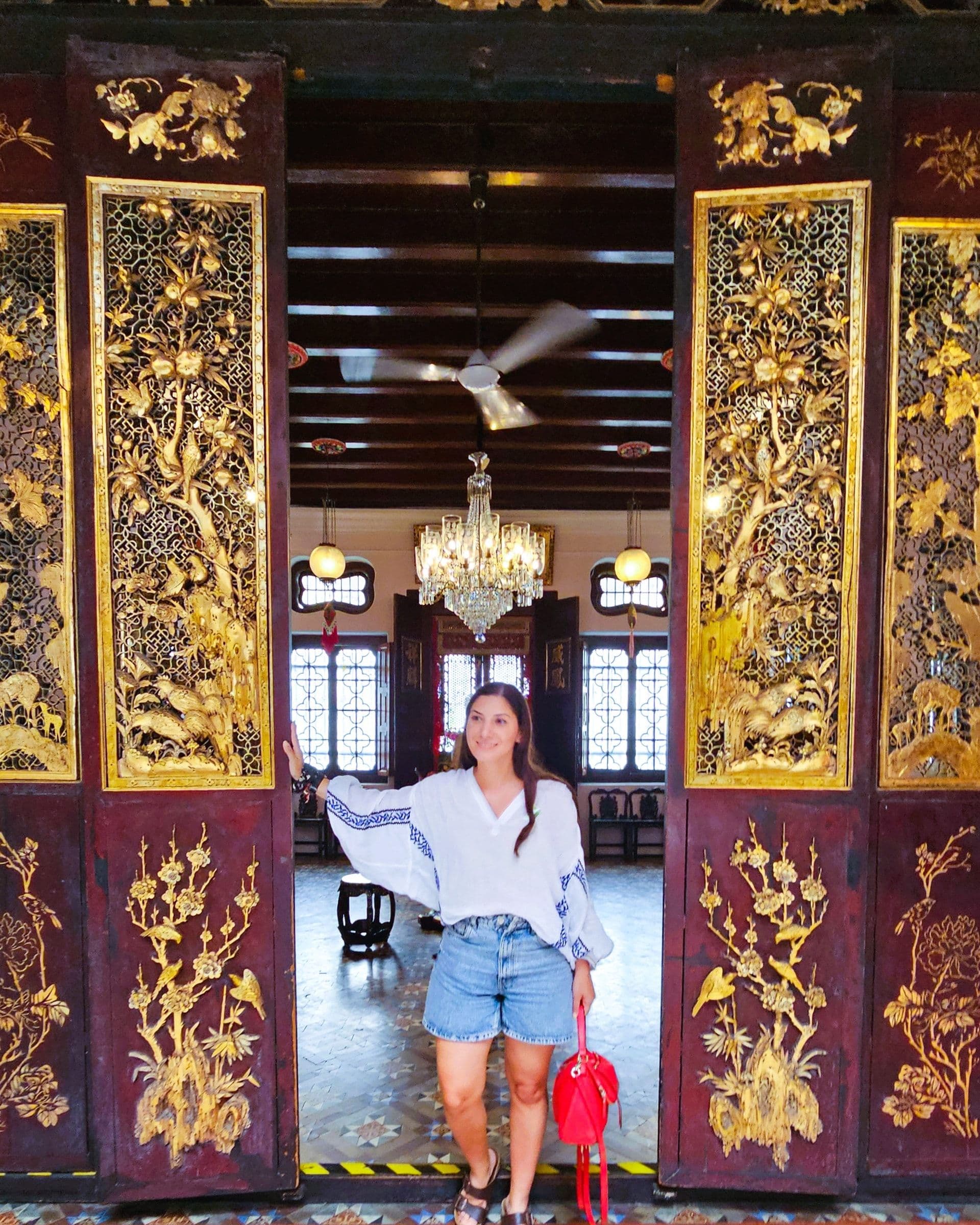
If you only have time for one of them, do the Blue Mansion. They are not the same kind of visit. The Blue Mansion is forty-five minutes walking through a building with someone telling you what you're looking at. The Peranakan Mansion is a museum you pace yourself through, a thousand-odd objects of a family's life, and it rewards you if that's your thing and bores you if it isn't. The blue wall is also the thing you will remember.
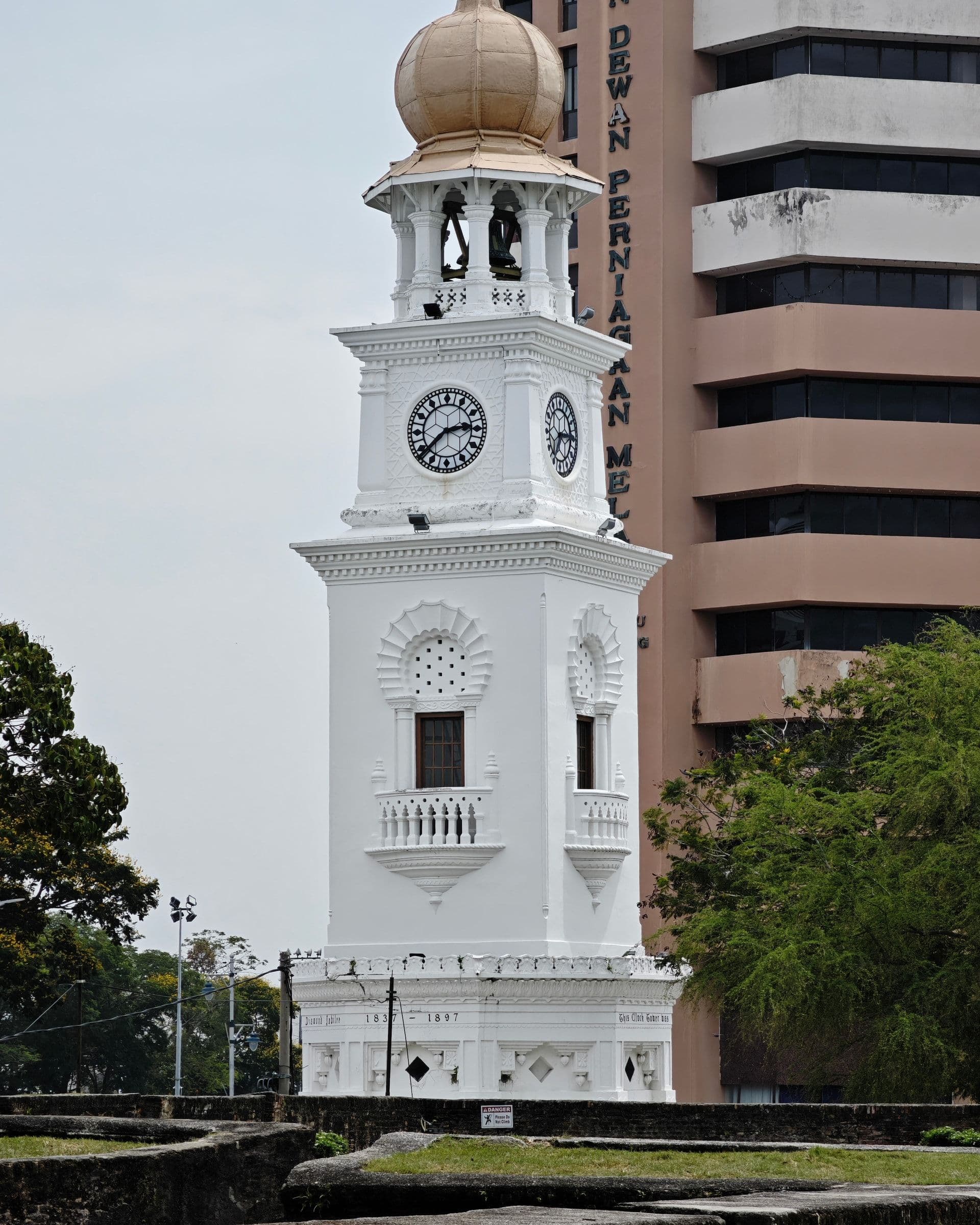
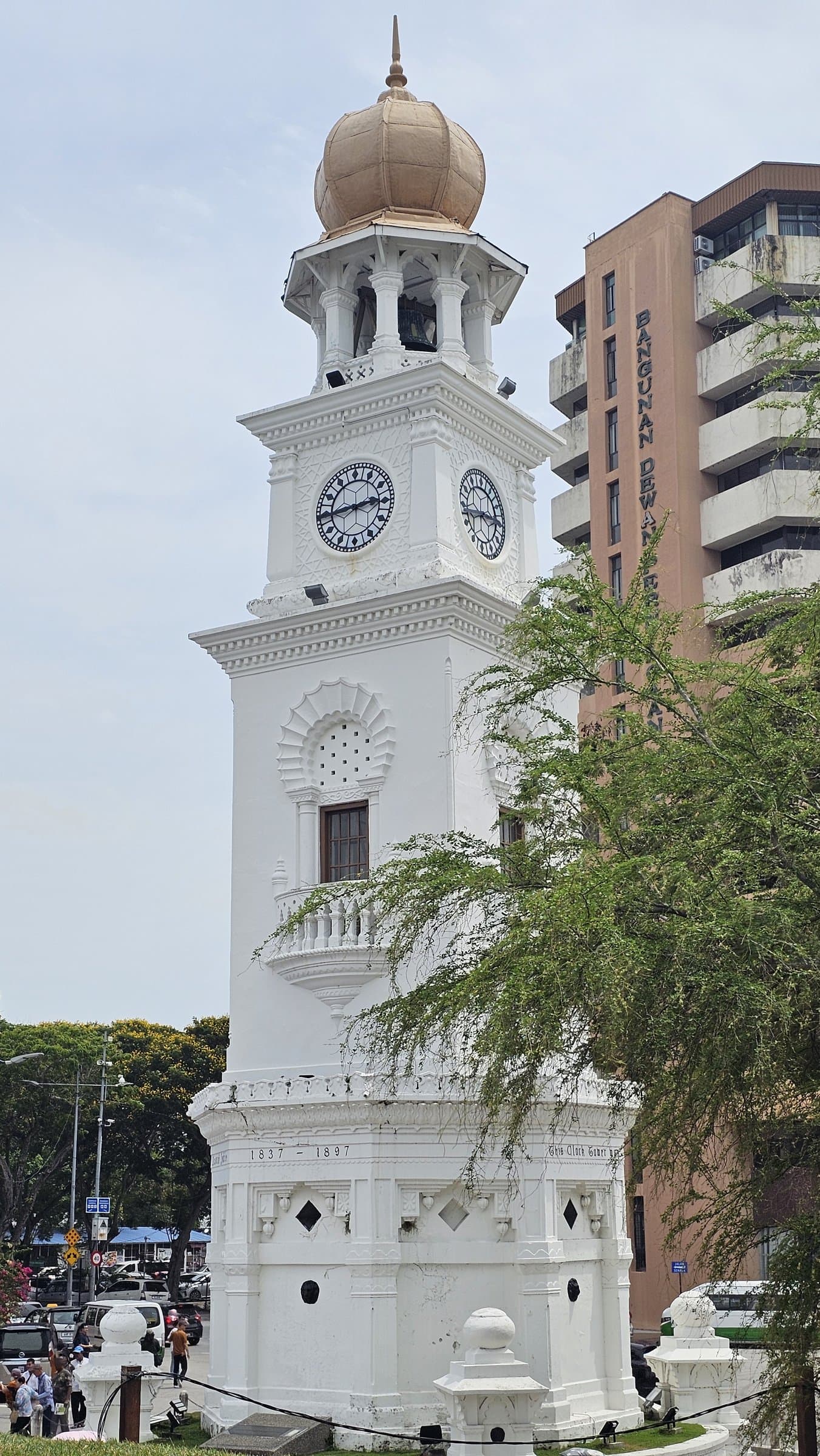
After the Peranakan Mansion, continue toward the Esplanade to see some of Penang's best colonial architecture. The Queen Victoria Memorial Clock Tower is the most photographed landmark, while Whiteaways Arcade is worth stepping inside for its shops and heritage displays. The surrounding buildings are best enjoyed as part of the walk.
Day 2 — Street art, temples & the jetties
Street ArtHarmony Street HeritageLittle IndiaClan Jetties
Street Art
from 7:30 AMPenang became famous for its street art thanks to the work of Lithuanian artist Ernest Zacharevic. For the 2012 George Town Festival, Zacharevic was commissioned to create a series of six murals across the town. He made George Town a hotspot on the Southeast Asia backpacker circuit.
In the heritage centre of George Town, you'll notice steel-rod artworks known as the "Marking George Town" project: 52 sets of caricatures in wrought iron, one per location, each about what happened on that particular corner.
There are many other murals on the streets of George Town. If you're a cat person, you'll enjoy strolling around the city. We particularly adored the depictions of cats.
Start tracking down Zacharevic's 3D-style murals early in the morning, as they get crowded later in the day. Two hours covers the famous ones if you don't detour; you will detour.
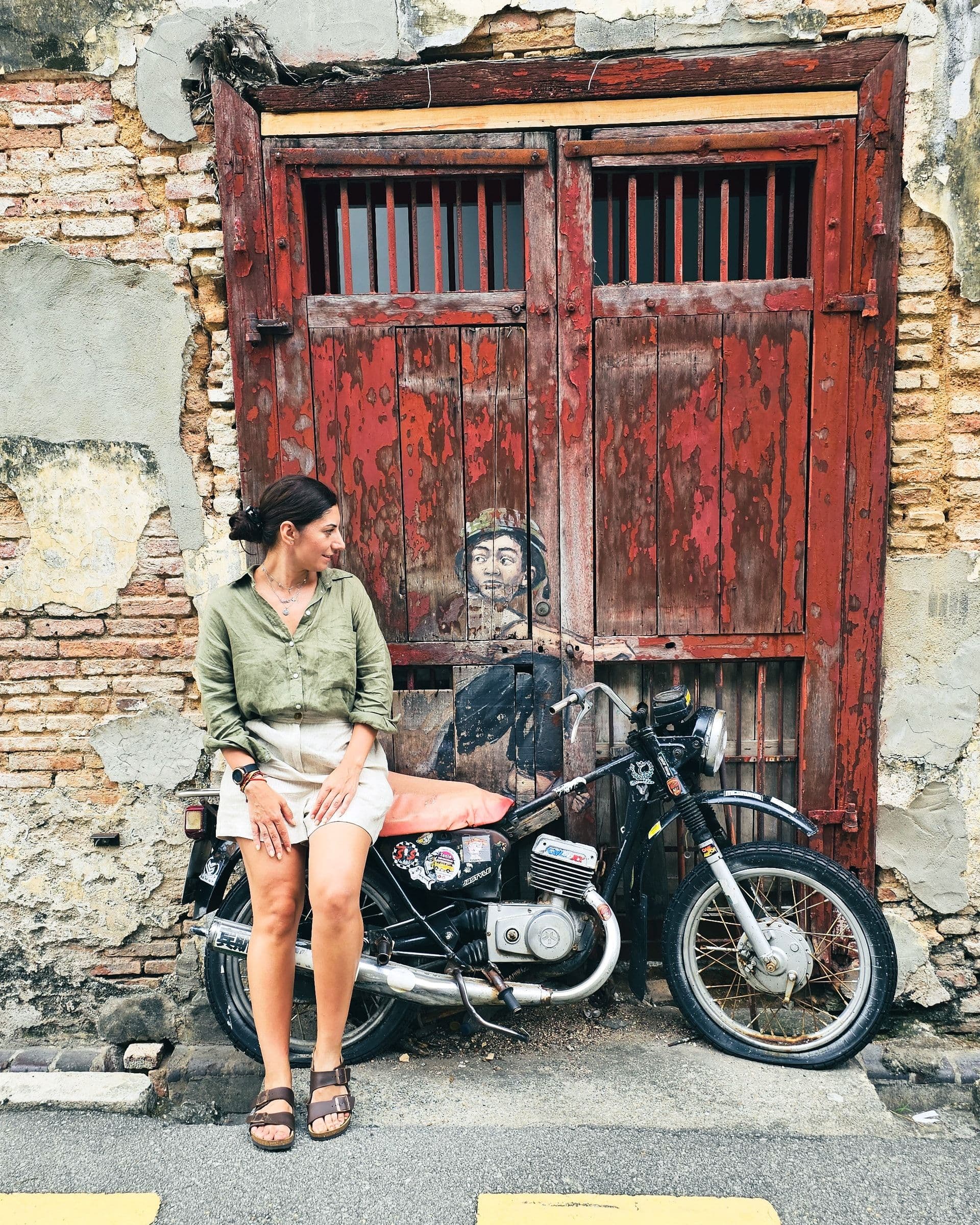
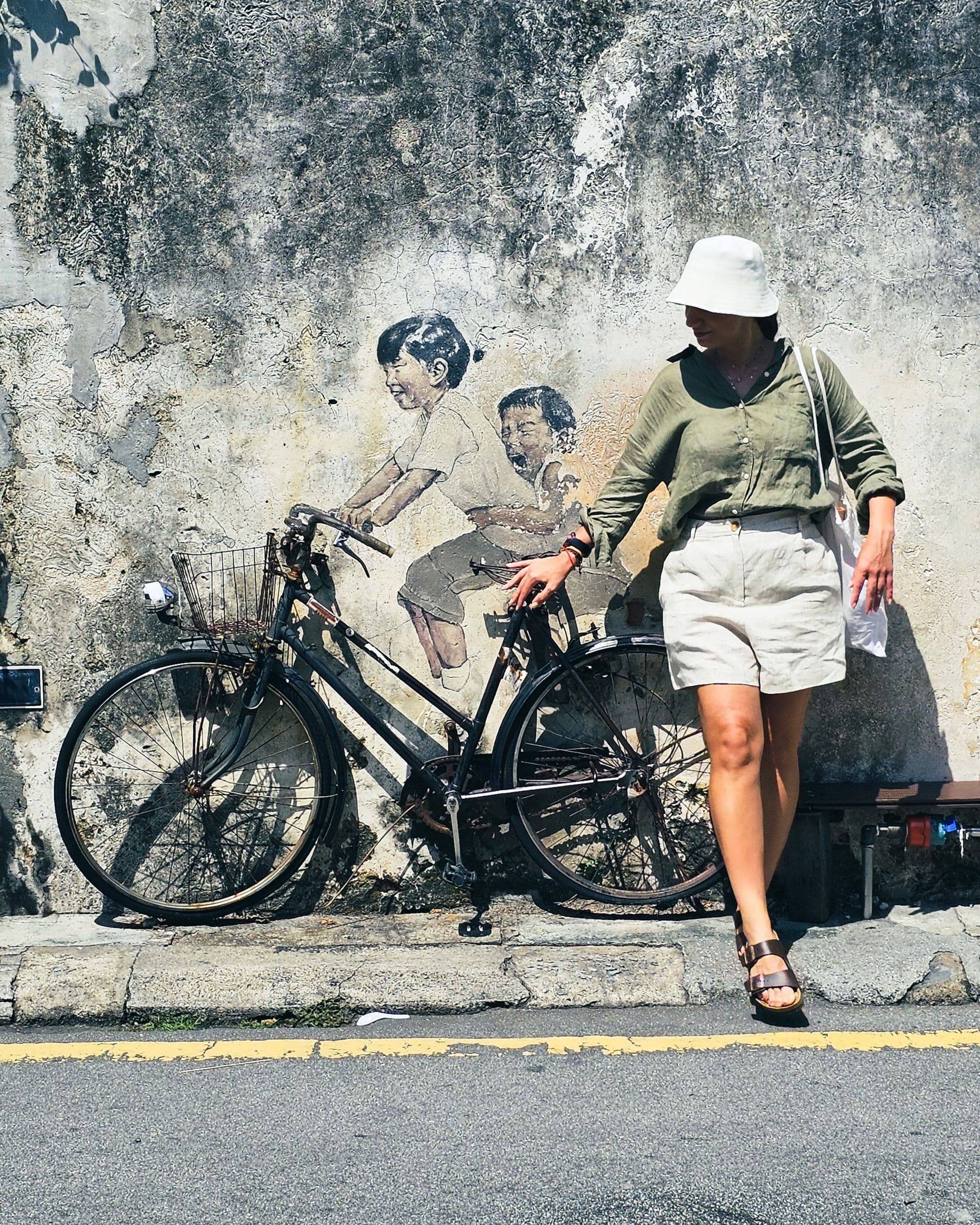
Here are some of the most famous murals to put on your list:
- Children on a Bicycle — Lebuh Armenian
- Brother and Sister on a Swing — an alley off Gat Lebuh Chulia · by Louis Gan, not Zacharevic · view on map
- Skippy the Giant Cat — Gat Lebuh Armenian (Armenian Street Ghaut) — a different street from Lebuh Armenian, and not a Zacharevic either
Zacharevic repainted Children on a Bicycle, Boy on a Motorcycle and Boy on Chair himself in 2024 after people complained they were weathering away, so the headline pieces are in better shape than they've been in years. The Swing is not: peeling paint, exposed brick. Worth knowing before you walk there.
These four are only a start. Our George Town street-art guide covers the rest.
Harmony Street
10 AMFormerly known as Pitt Street, Harmony Street is unique: it features four different religious buildings within walking distance of each other (a church, a mosque, a Hindu temple, and a Taoist temple), all built in the 19th century by migrants from various places, and they have shared this street ever since. George Town and Melaka were listed together by UNESCO as the surviving historic cities of the Straits of Malacca.
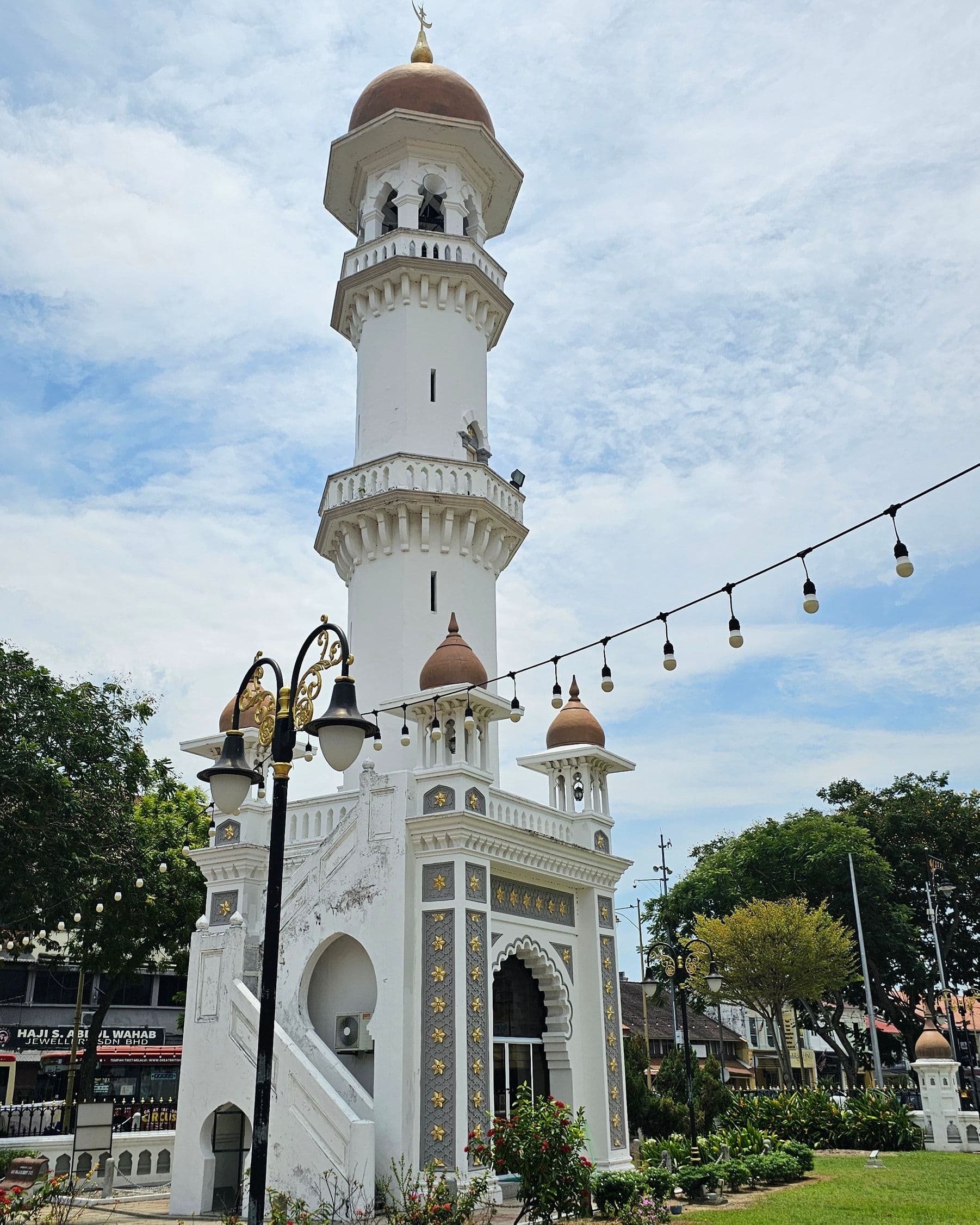
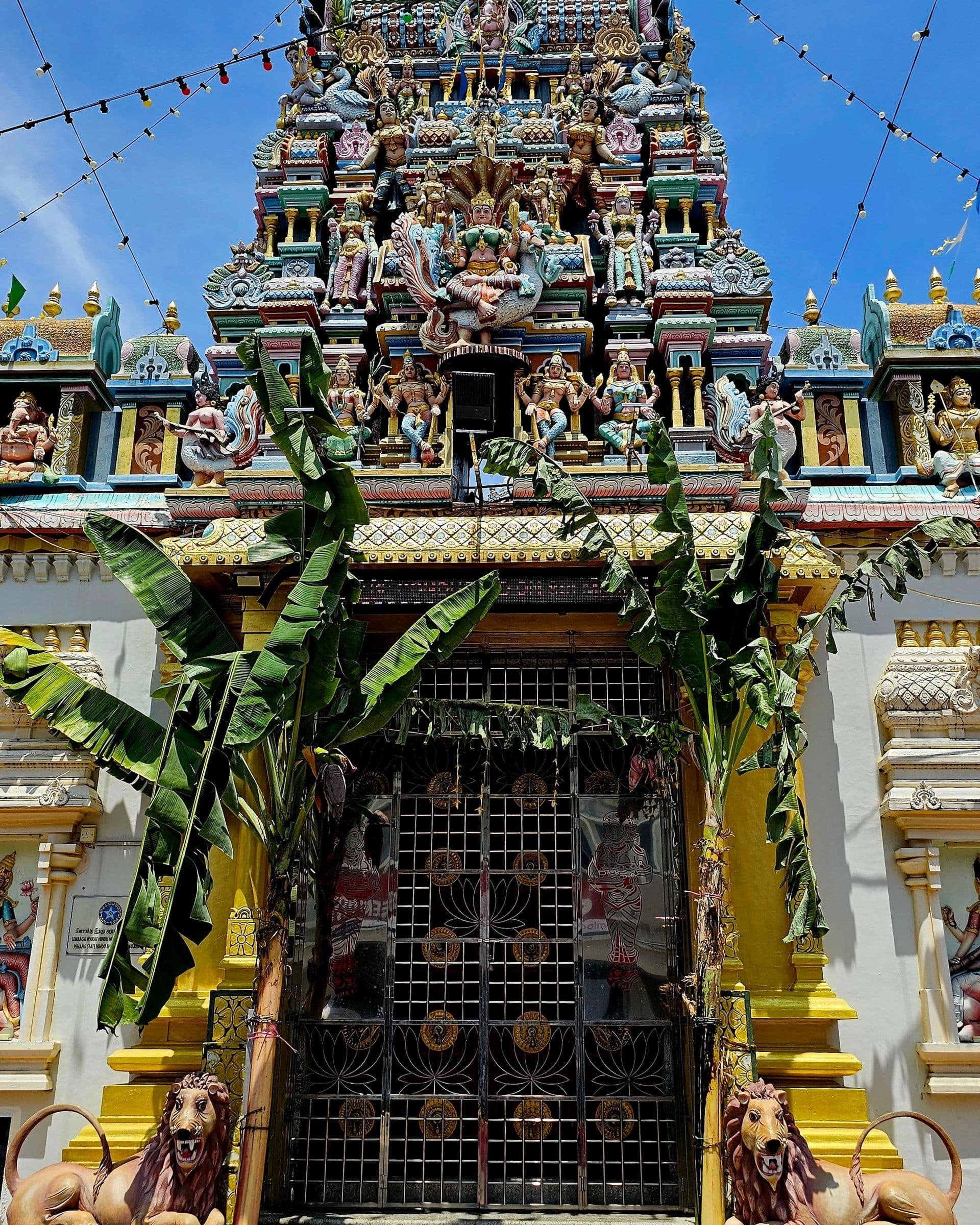
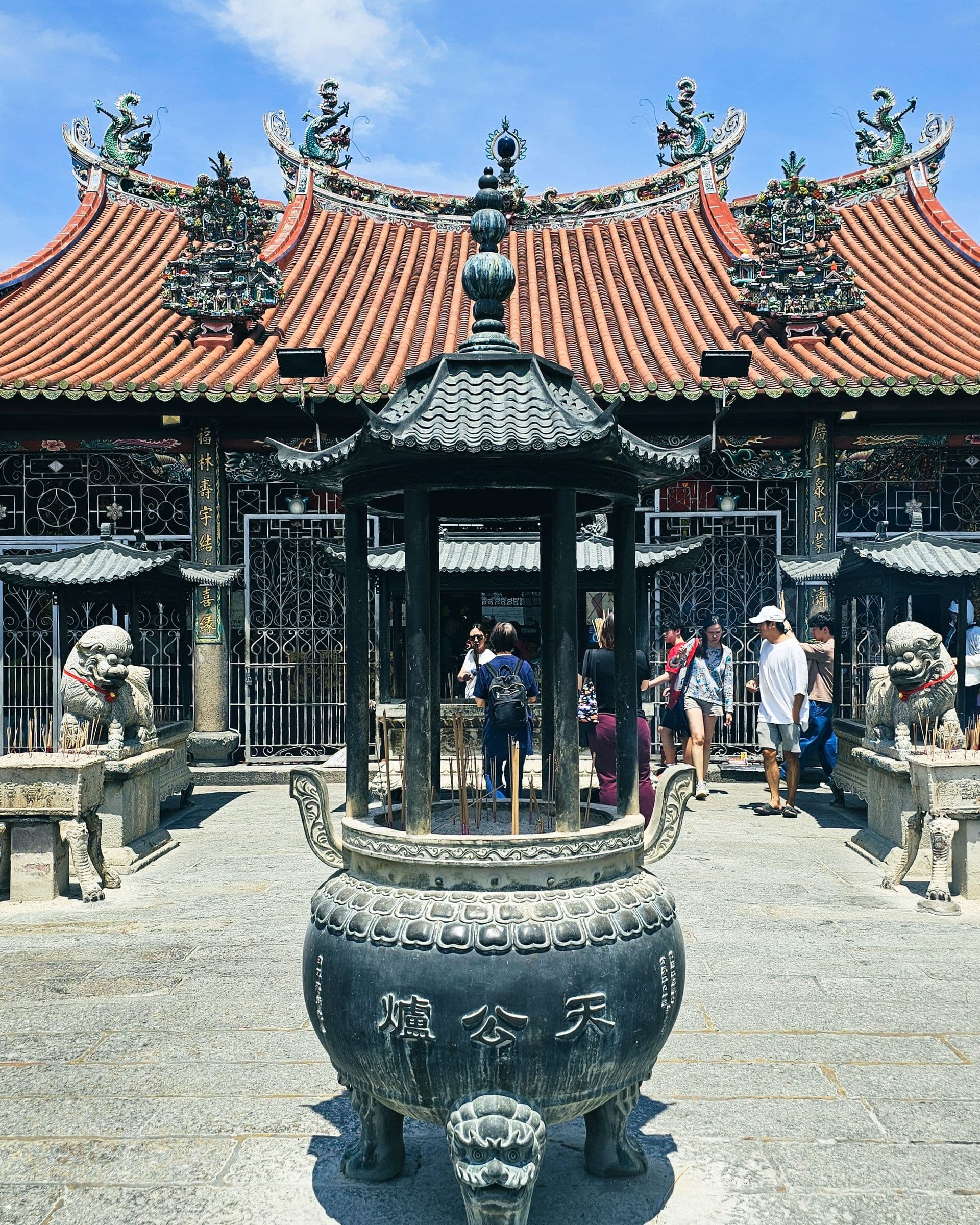
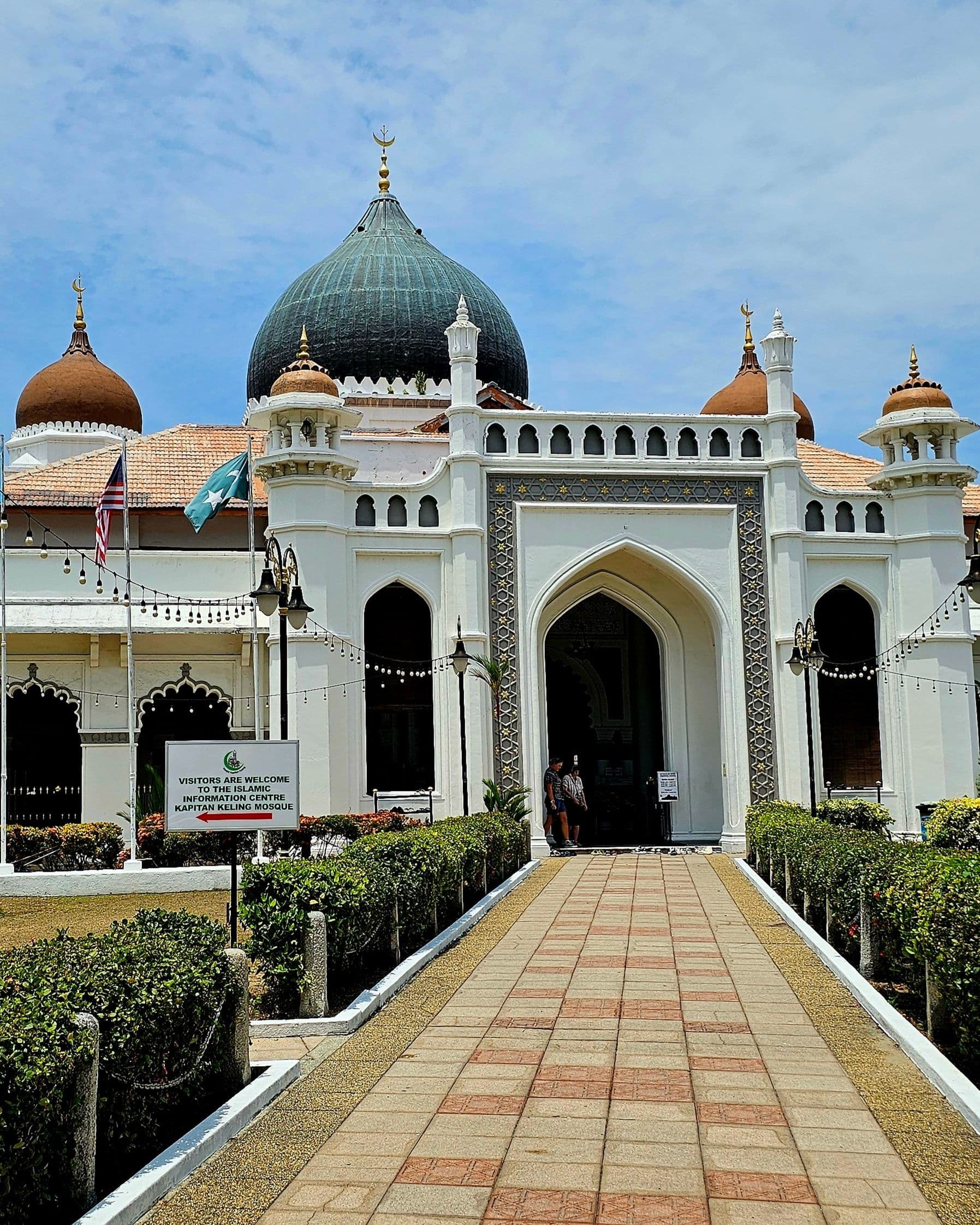
The four sacred places are St. George's Church, Sri Mahamariamman Temple, the Goddess of Mercy Temple, and Kapitan Keling Mosque. Each building feels different. St George's Church is simple, white and quiet inside. Sri Mahamariamman Temple is the opposite, with carved figures, bright colours, incense and bells. Kapitan Keling Mosque brings Indian-Islamic architecture to the street, and non-Muslim visitors can explore the grounds and outer areas during visiting hours outside prayer times. Robes and sarongs are available if you need them.
The hours decide your order, and no single visit gets you inside all four. St George's takes visitors on weekdays between 10 AM and noon and that is the whole window. Sri Mahamariamman runs 6:30 AM to noon and again 4:30 to 9 PM. Kuan Yin Teng, the Goddess of Mercy, is open 5 AM to 6 PM. The Kapitan Keling Mosque takes non-Muslim visitors in the early afternoon, outside prayer times, and the exact window moves. It shifts in Ramadan. So: church, Hindu temple and Kuan Yin before lunch, mosque after. We did the first three and ran out of morning for the mosque, which is how we know the hours are the real constraint here.
Little India
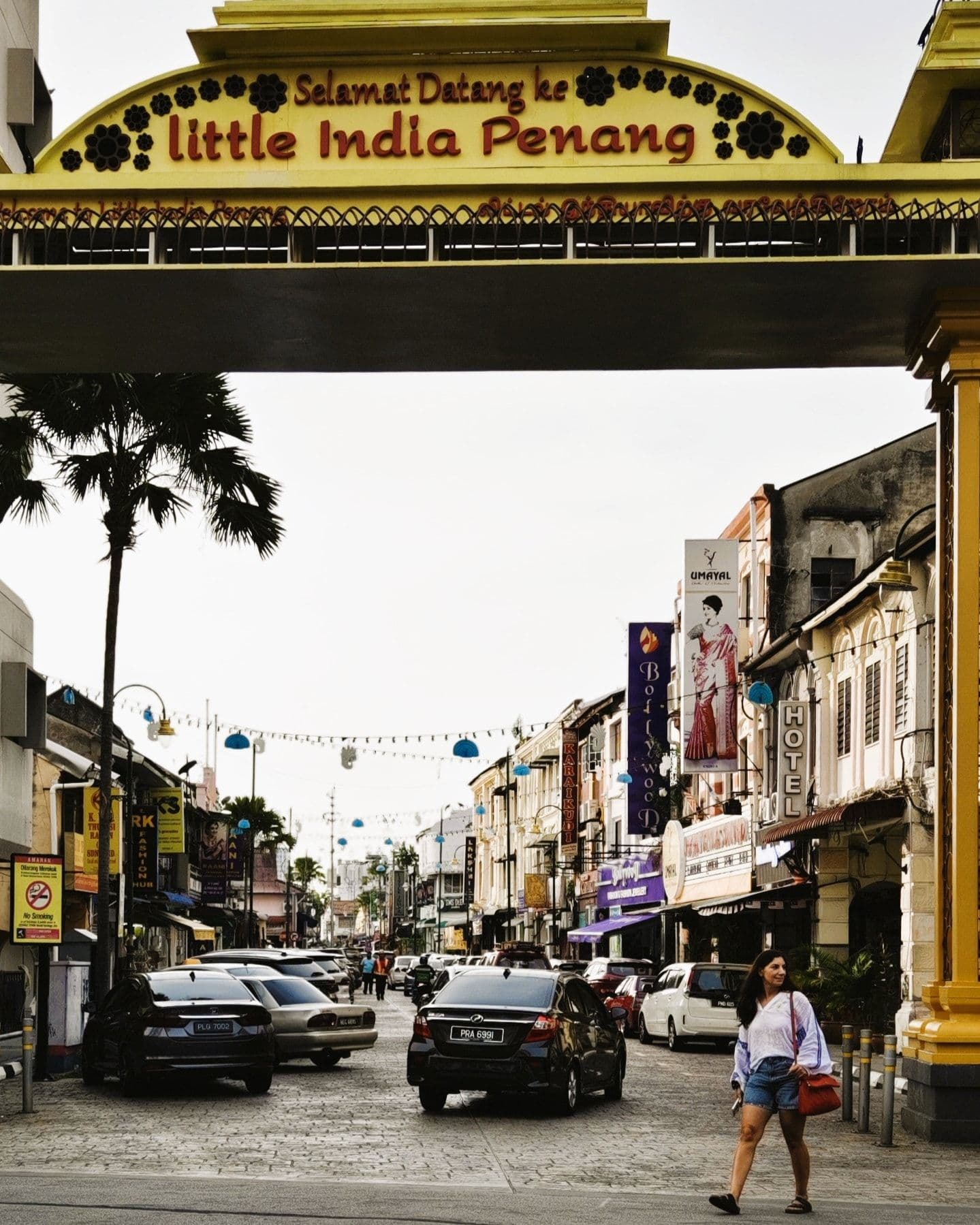
12:30 PMLittle India is only a few streets, but it's an easy place to slow down for a while. This little quarter is where early Indian immigrants first settled. Today it's a bold, bright, colourful area with cafés, sari and fabric stores, fresh-flower sellers with bright orange marigold garlands and pink lotus buds, ethnic jewellery (real gold or costume, bangles and earrings to die for), food stalls with mouth-watering fried snacks and trays of colourful sweets, temples, and more.
The Clan Jetties
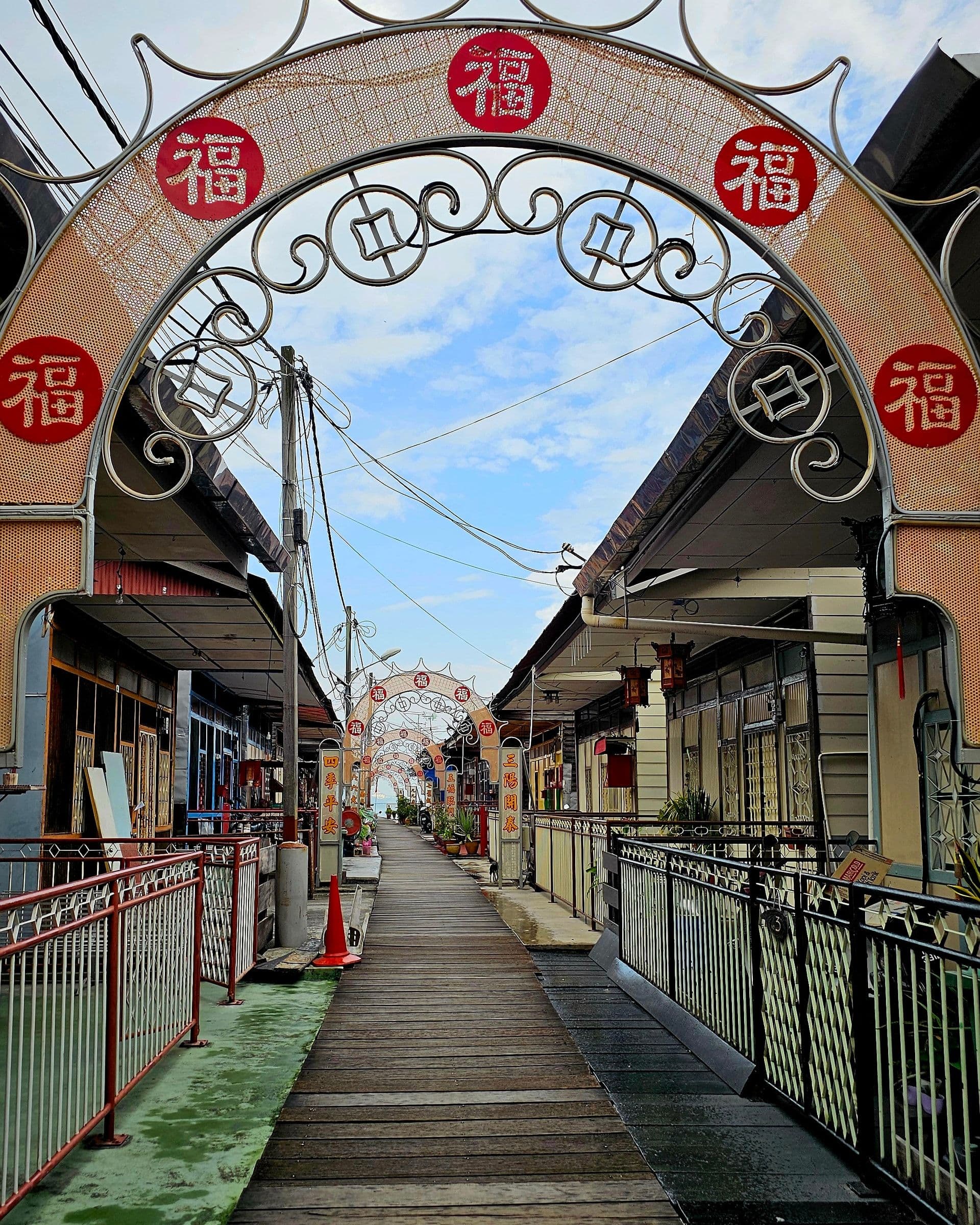
3 PMThe Penang Clan Jetties are unique settlements along the Weld Quay waterfront. They stand out with their long wooden piers that extend into the harbour. Each jetty belongs to a different Chinese clan, and families still live in houses built over the water.
Start with Chew Jetty, the busiest of them all. The boardwalk is lined with souvenir stalls, snacks and drinks, but keep walking to the end. That's where the crowds thin out and the view opens across the water to Penang Bridge.
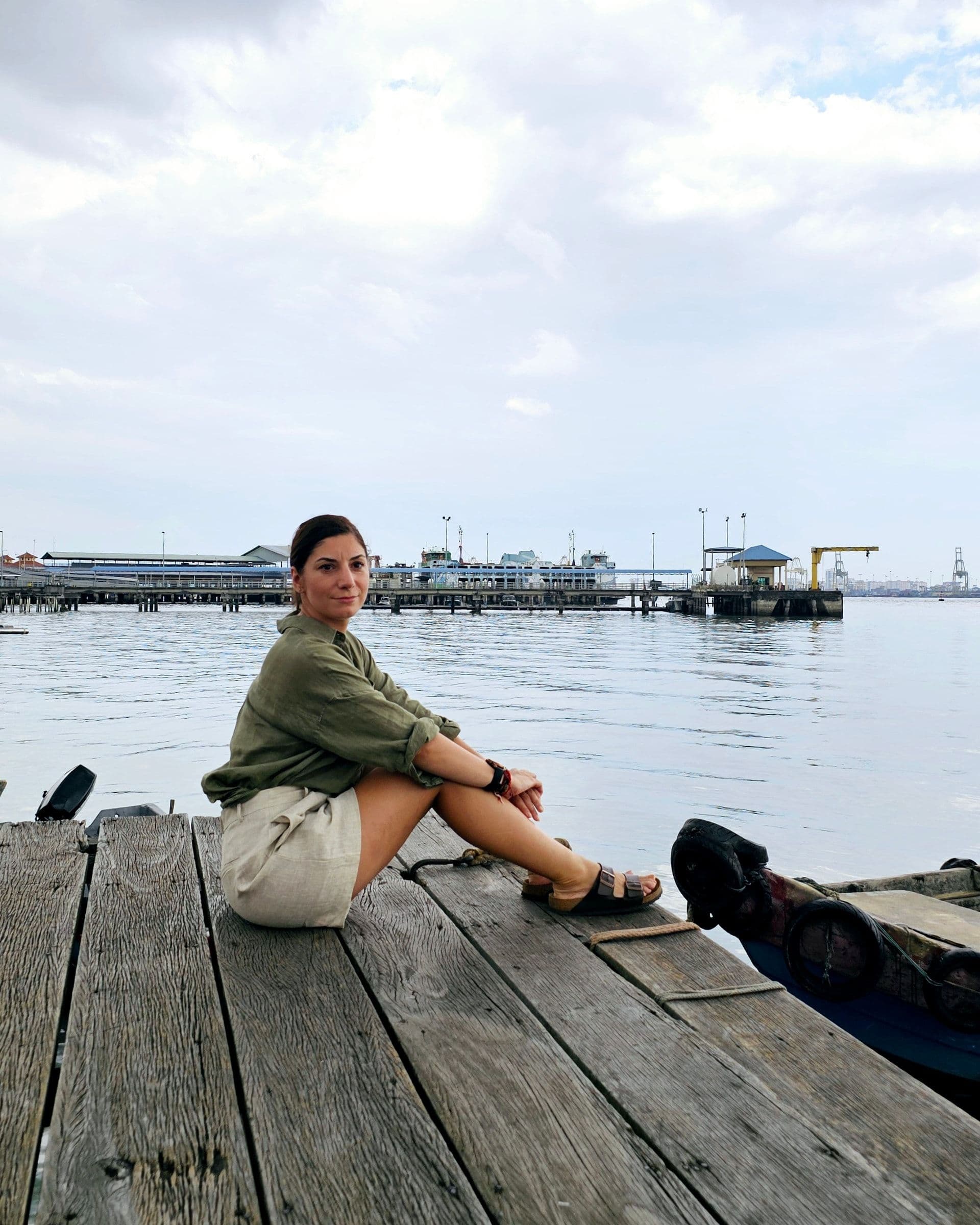
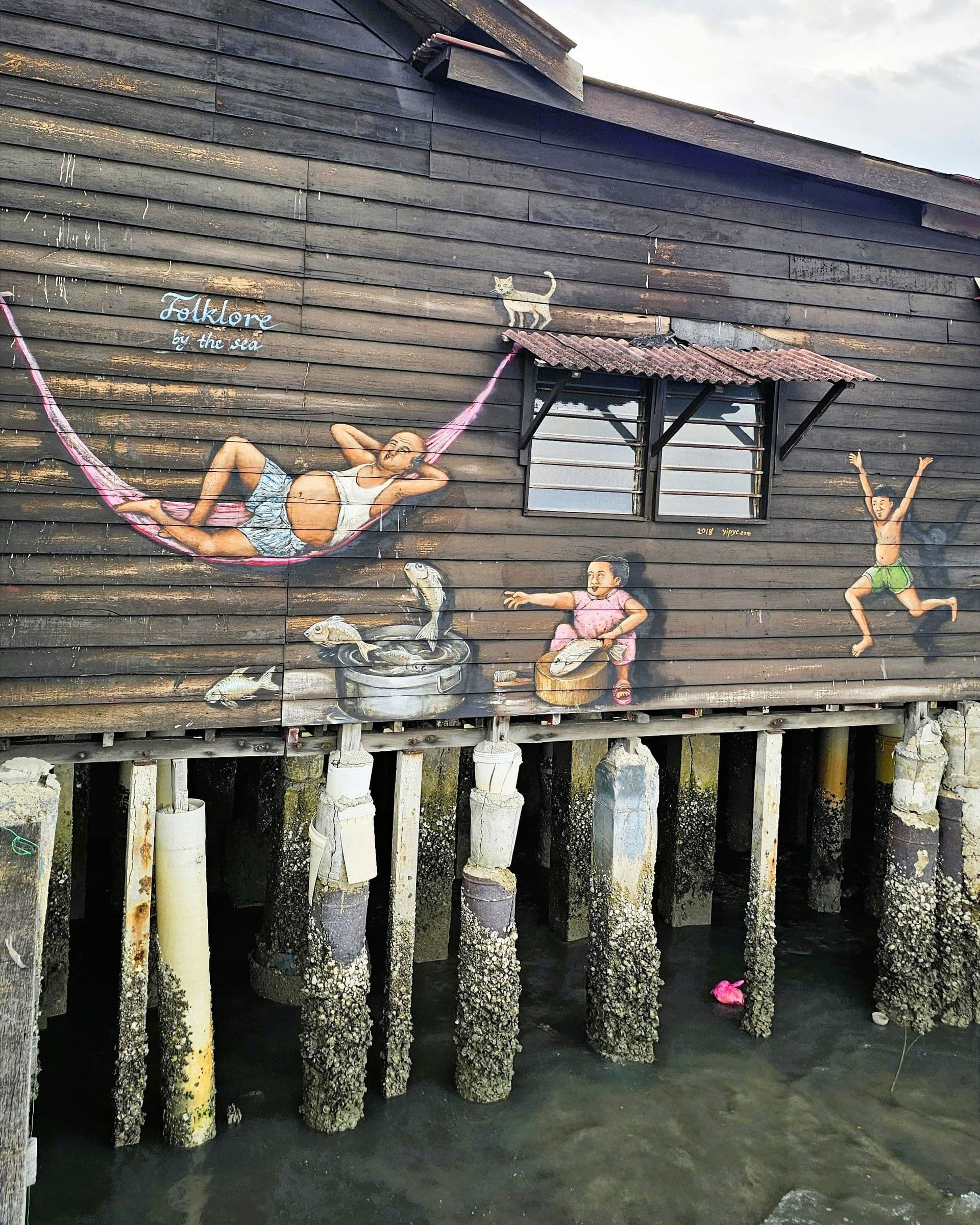
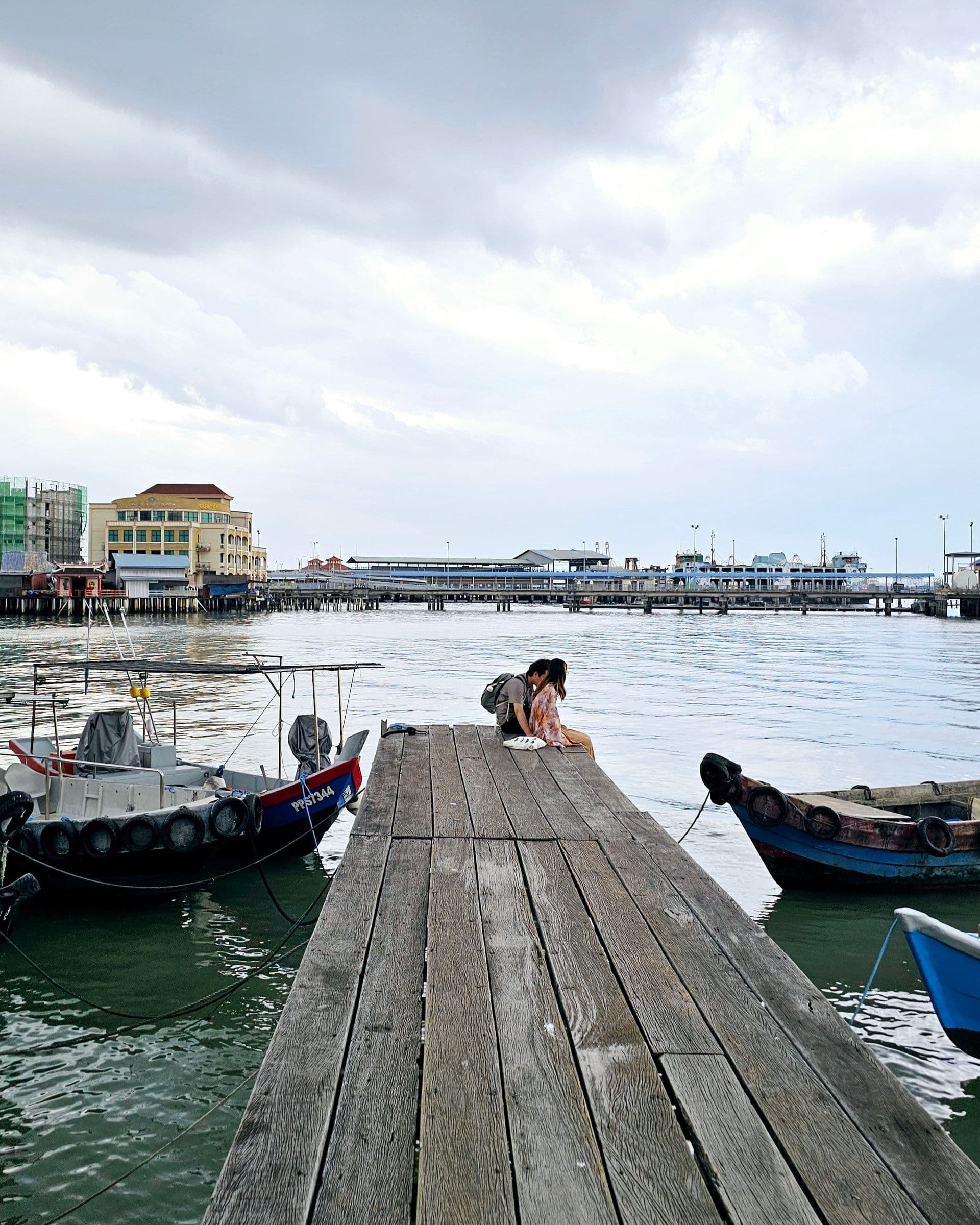
Visitors are asked to come between 9 AM and 9 PM. You can also hire boats for a 10-minute sightseeing tour around the pier. An hour covers both jetties at a stroll.
If Chew Jetty feels too busy, carry on to Lim Jetty. By the time we reached it, the souvenir stalls had disappeared and so had the crowds. It felt like a place where people happened to live, rather than somewhere arranged for visitors.
Day 3 — Penang Hill & Kek Lok Si
Sunrise at Penang HillKek Lok Si TempleKongsis & Chinatown
Day 3 is the one day you'll want Grab. Penang Hill and Kek Lok Si are both well outside the heritage area, so have the app ready before you set off.
Sunrise at Penang Hill
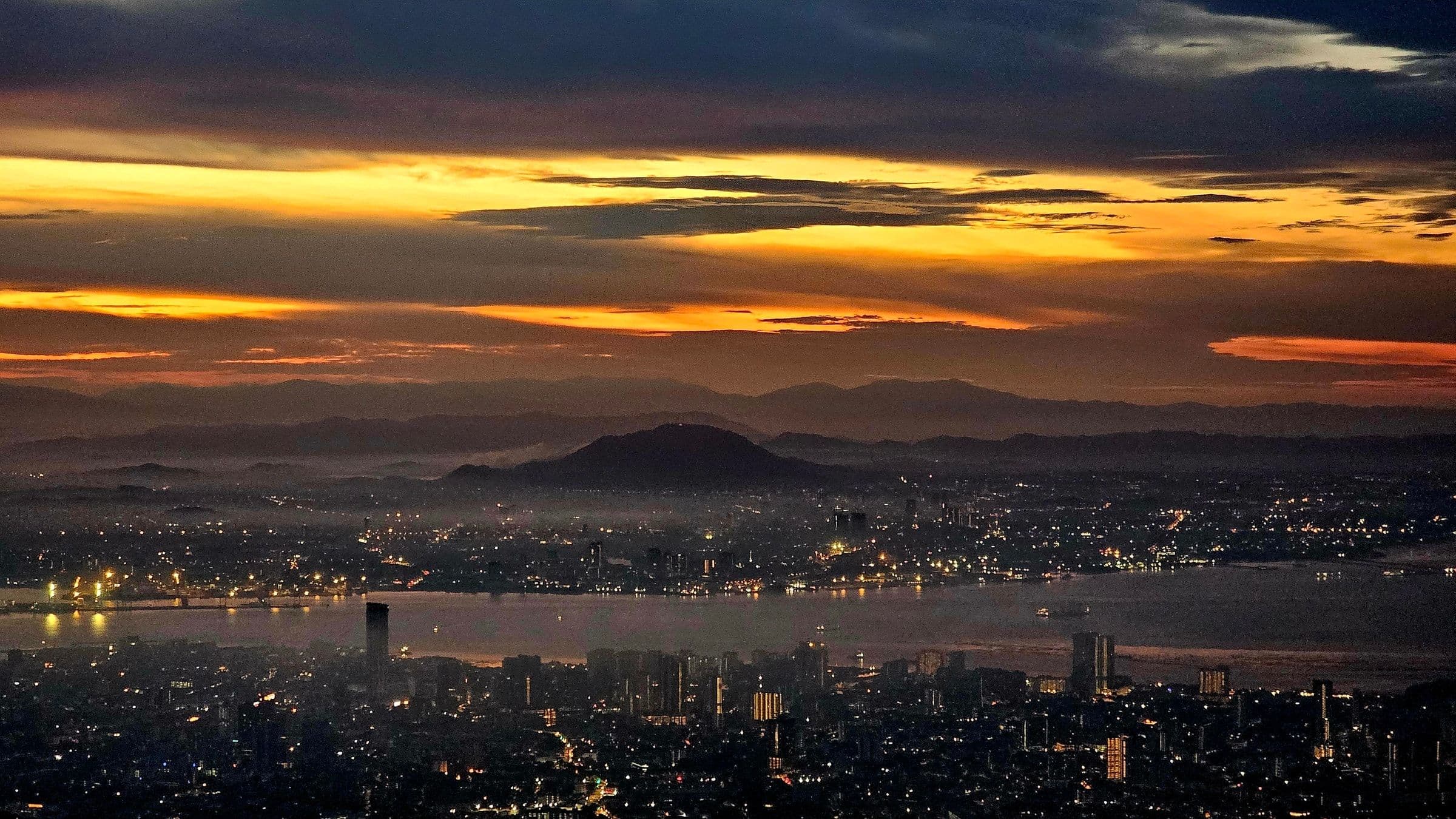
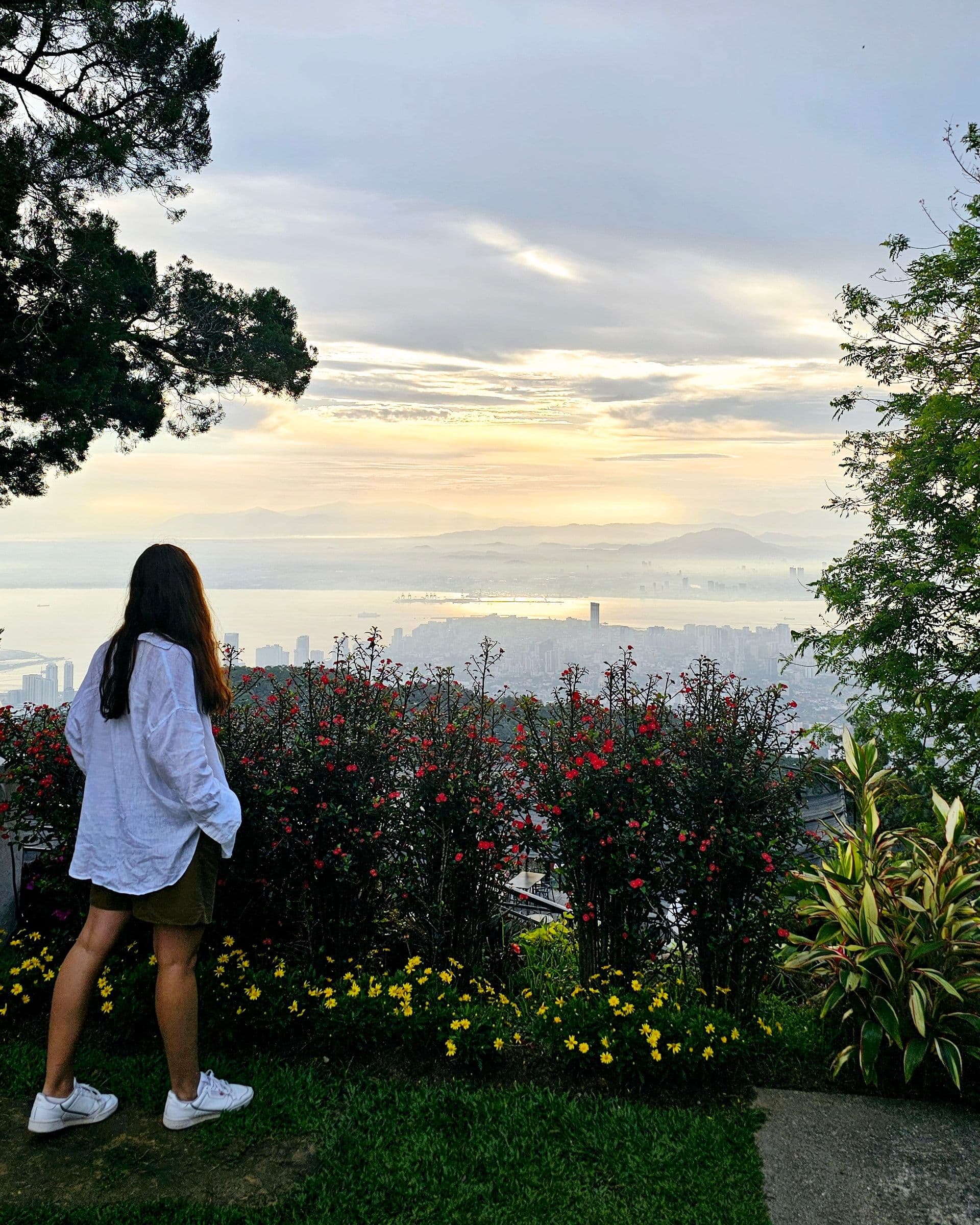
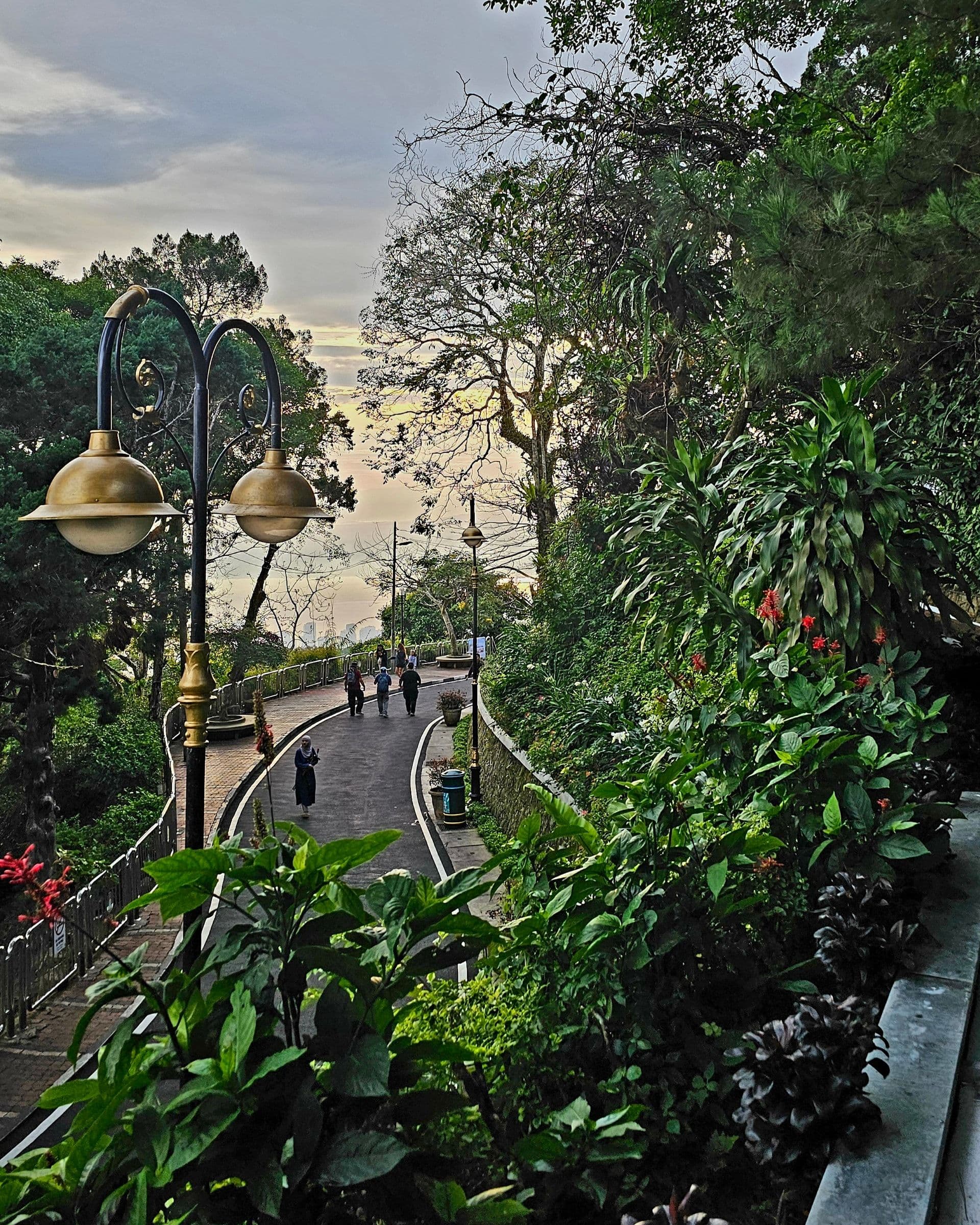
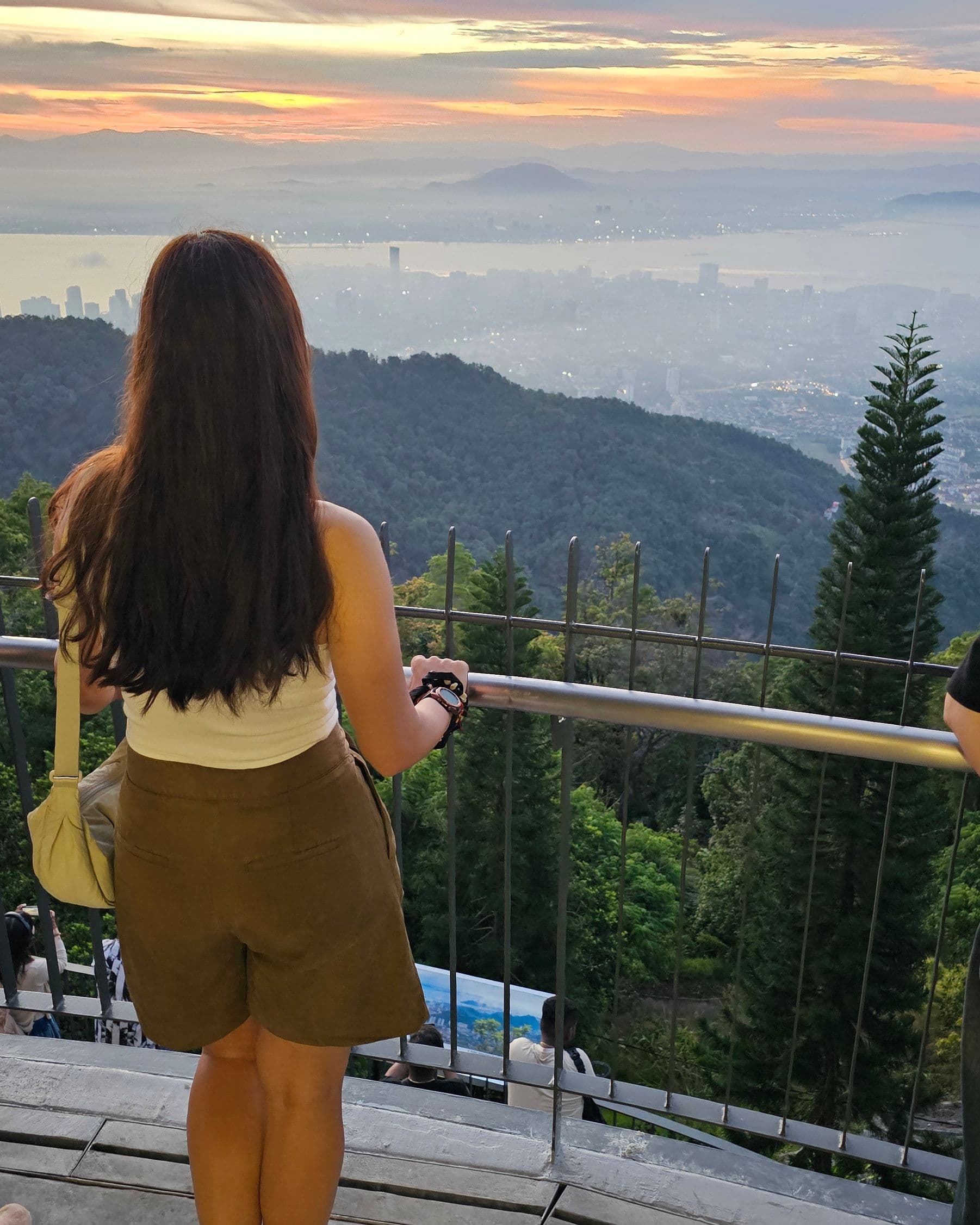
6:30 AM funicularTake the first train at 6:30 AM and head for the last cabin. Looking back down the track, you watch the city slowly spread out behind you for the whole climb instead of staring into the hillside. Fifteen minutes later you're at the top, where it's usually five or six degrees cooler, with views across George Town, the strait and the bridges. Before you commit to the early start, check the air quality forecast. In August and September, haze from the Sumatra fires can sometimes hide the view completely. It isn't an every-year problem, but it's worth knowing before the alarm goes off. Penang Hill also offers several hiking trails leading to colonial bungalows at the top. If you prefer, you can skip the funicular and hike all the way up.
The Habitat Penang Hill
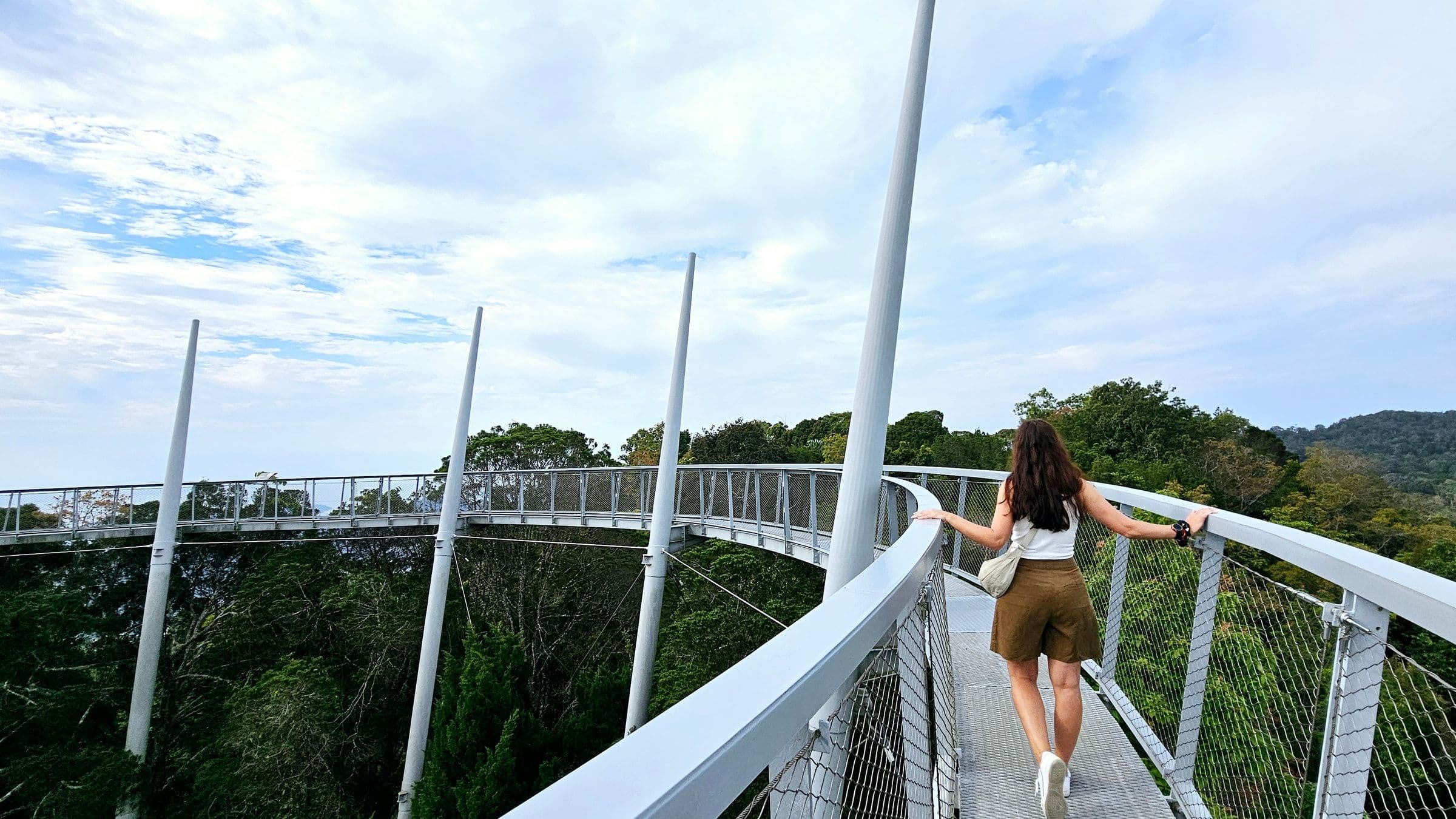
from 9 AMGrab a coffee and explore the area until 9 AM, when The Habitat Penang Hill opens. Declared a forest reserve in 1911, the site sits within a rainforest reckoned to be around 130 million years old. The headline walk is Langur Way, a canopy walkway of two 115-metre spans (230 m in all) suspended about 40 m above the forest floor, and Curtis Crest, a tree-top platform at roughly 800 m above sea level, the highest public viewpoint on the island. There's also a five-line zipline course you can add when you book, and one to two hours covers the trails and gardens at a walk.
The extra RM 60 gave us one of our favourite parts of the day. It felt much more like walking through real jungle than a landscaped attraction. The one surprise was the wildlife: you hear birds and animals almost constantly, but actually spotting them takes a lot more patience than we had.
If you live, work or study in Malaysia, the Lower Station sells a RM 6 return sunrise fare between 6:15 and 8 AM. It is not available on holidays or peak days.
Opening hours on the hill:
- Penang Hill Funicular Train
- 6:30 AM – 11 PM, with the last train up at 10 PM
- The Habitat Penang Hill
- 9 AM – 6:30 PM (the booking engine runs to 9 PM, which covers the evening walk)
- Cliff Cafe / Astaka Bukit Bendera
- 9 AM – 6 PM
- David Brown's Restaurant
- 9 AM – 10 PM
- Monkey Cup Garden
- 9 AM – 6 PM
- Owl Museum
- 9 AM – 6 PM
- Kopi Hutan
- 9 AM – 6 PM
Kek Lok Si Temple
Grab a ride to Kek Lok Si on level 2 and start exploring the largest Buddhist temple in Malaysia and a place of pilgrimage. The temple climbs the hillside through prayer halls, pagodas, pavilions and a bell tower, each built at a different time and with its own style.
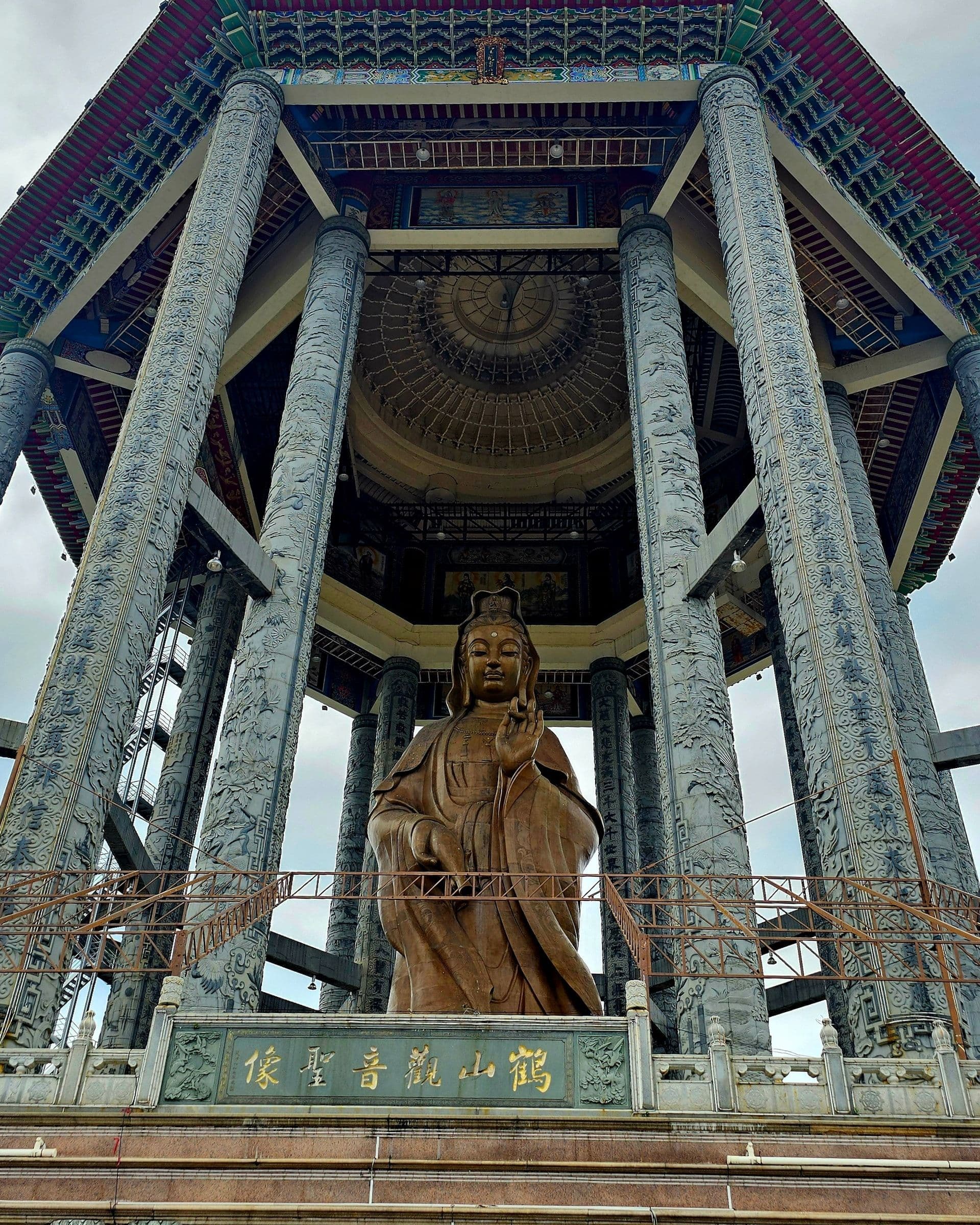
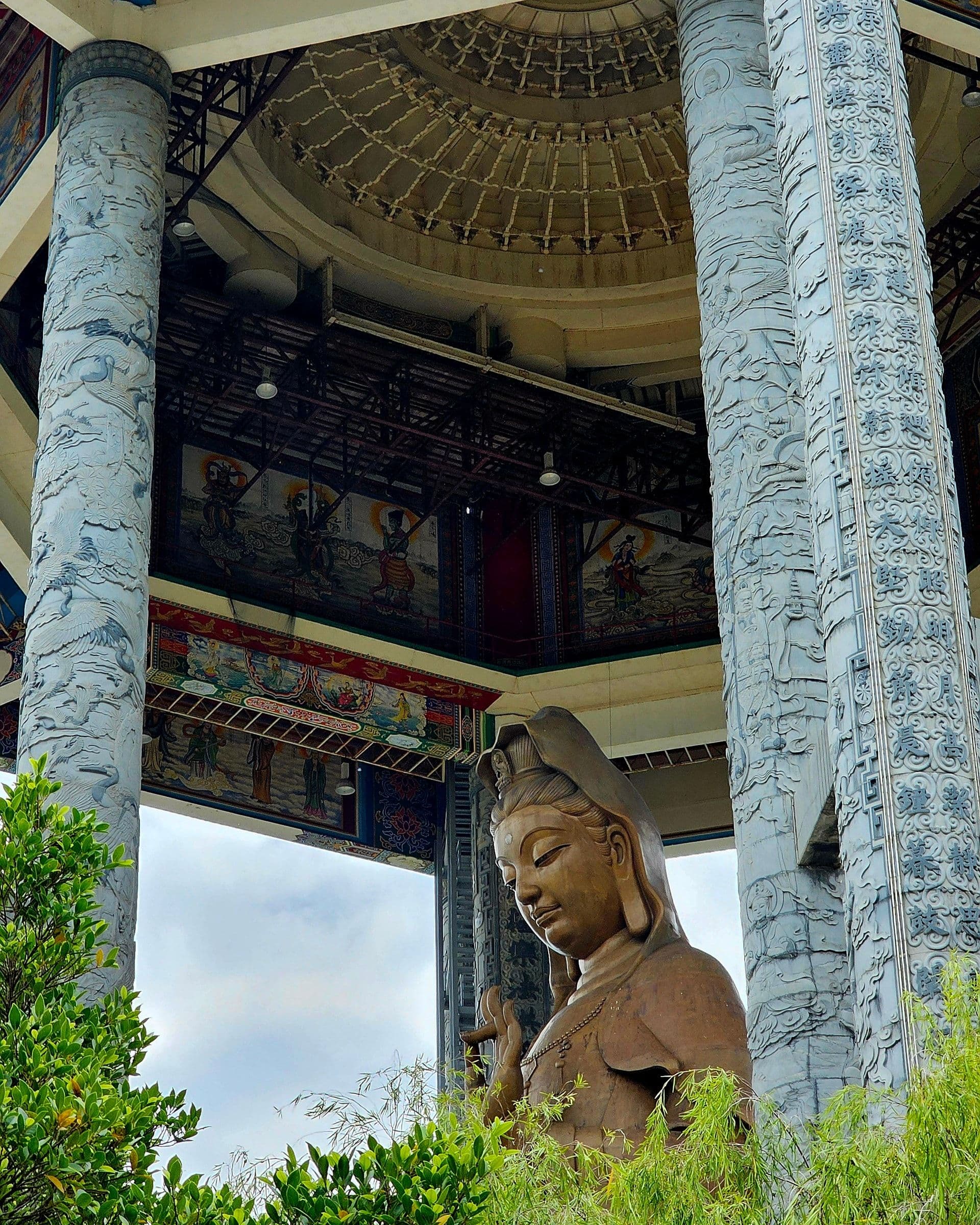
The first few minutes are all souvenir stalls, and there are a lot of them. Keep going. Once you're beyond them, the noise drops away and the temple feels completely different. Even from below you can feel how massive and impressive it is, especially with the huge Buddha statue watching over the area. The giant pagoda, adorned with 10,000 Buddha statues, the 30m bronze statue of the Goddess of Mercy, and the panoramic view over Air Itam town all add to the calm. There's nothing to pre-book for Kek Lok Si: the grounds are free, and the pagoda and lift are paid in cash at the gate.
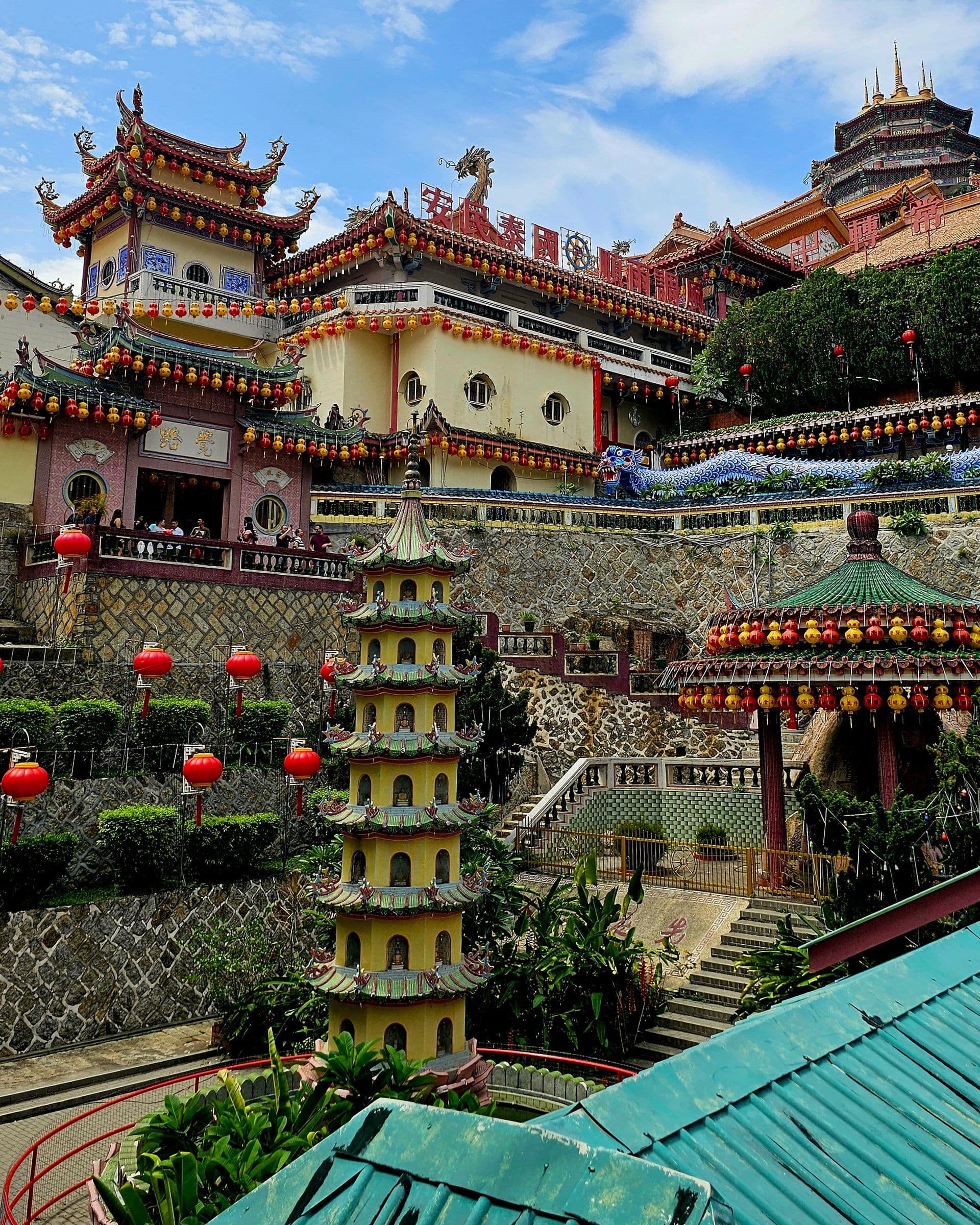
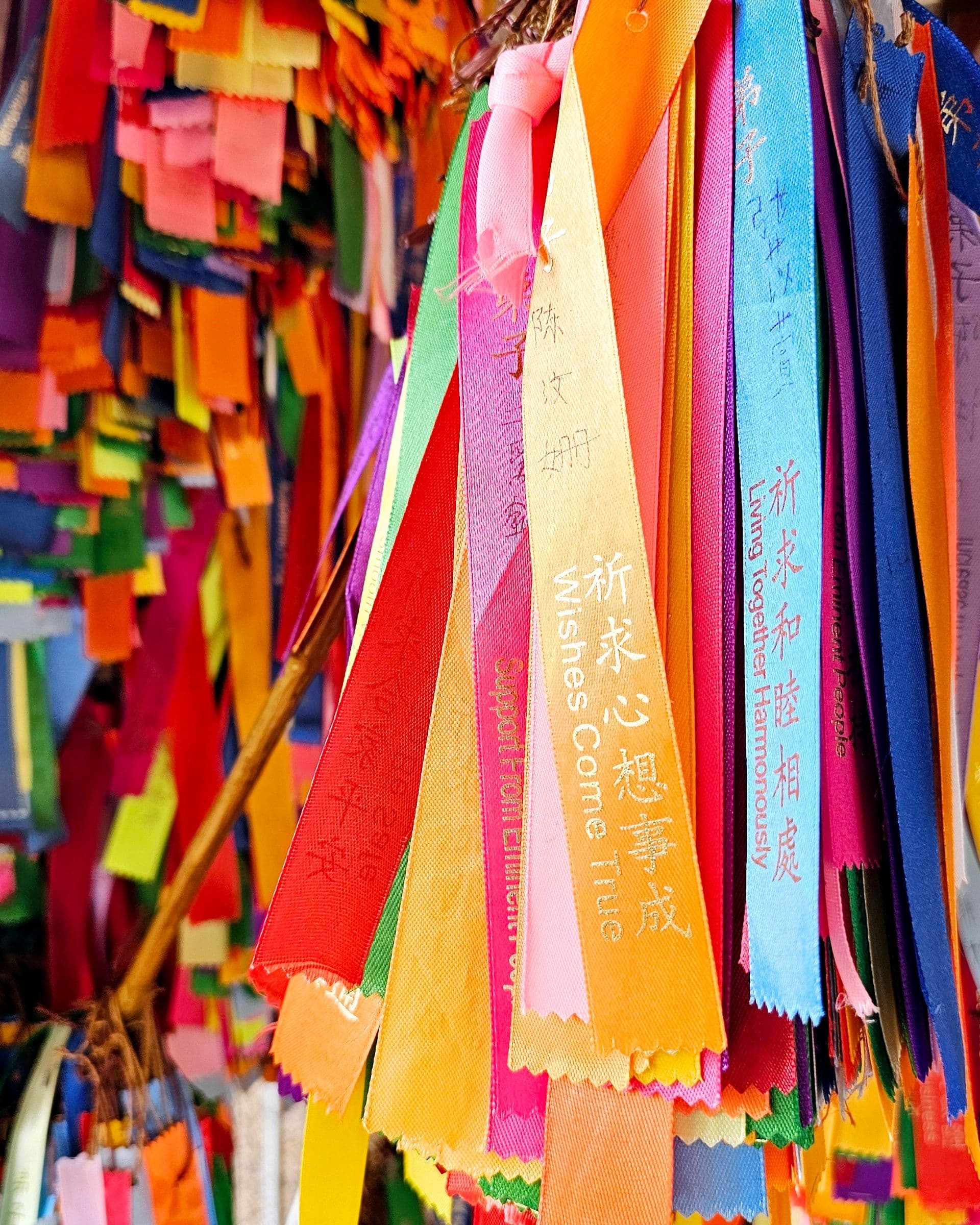
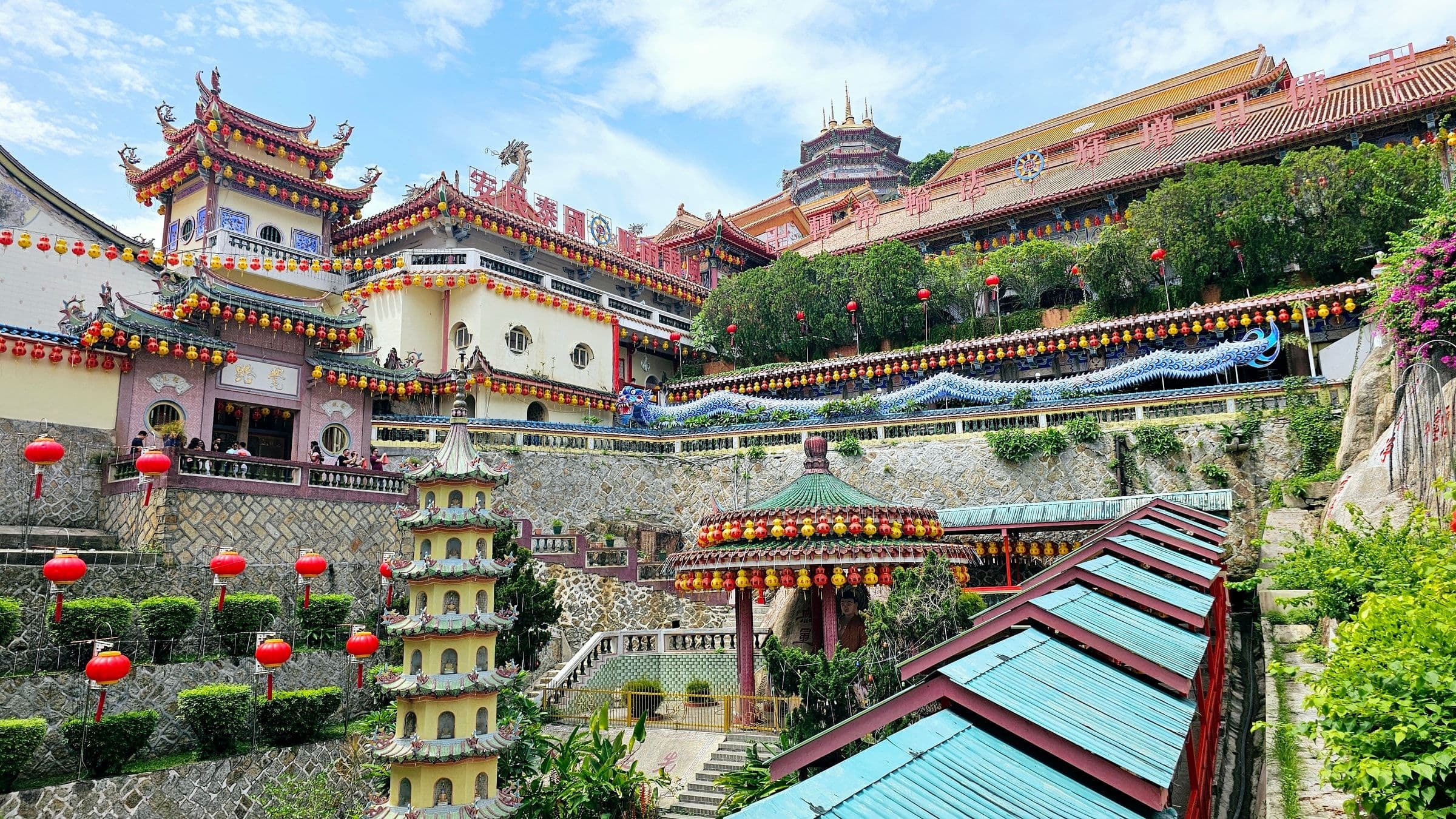
Then take a Grab back to the heritage quarter (~15 min) and head to Khoo Kongsi. You'll still have time for Chinatown before the hawker stalls open for dinner.
Kongsis and Chinatown
Chinatown is a maze of narrow streets lined with two-storey shophouses, with shops below and homes above. In the evening the hawker stalls take over, and it's one of the easiest places in town to stop for dinner.
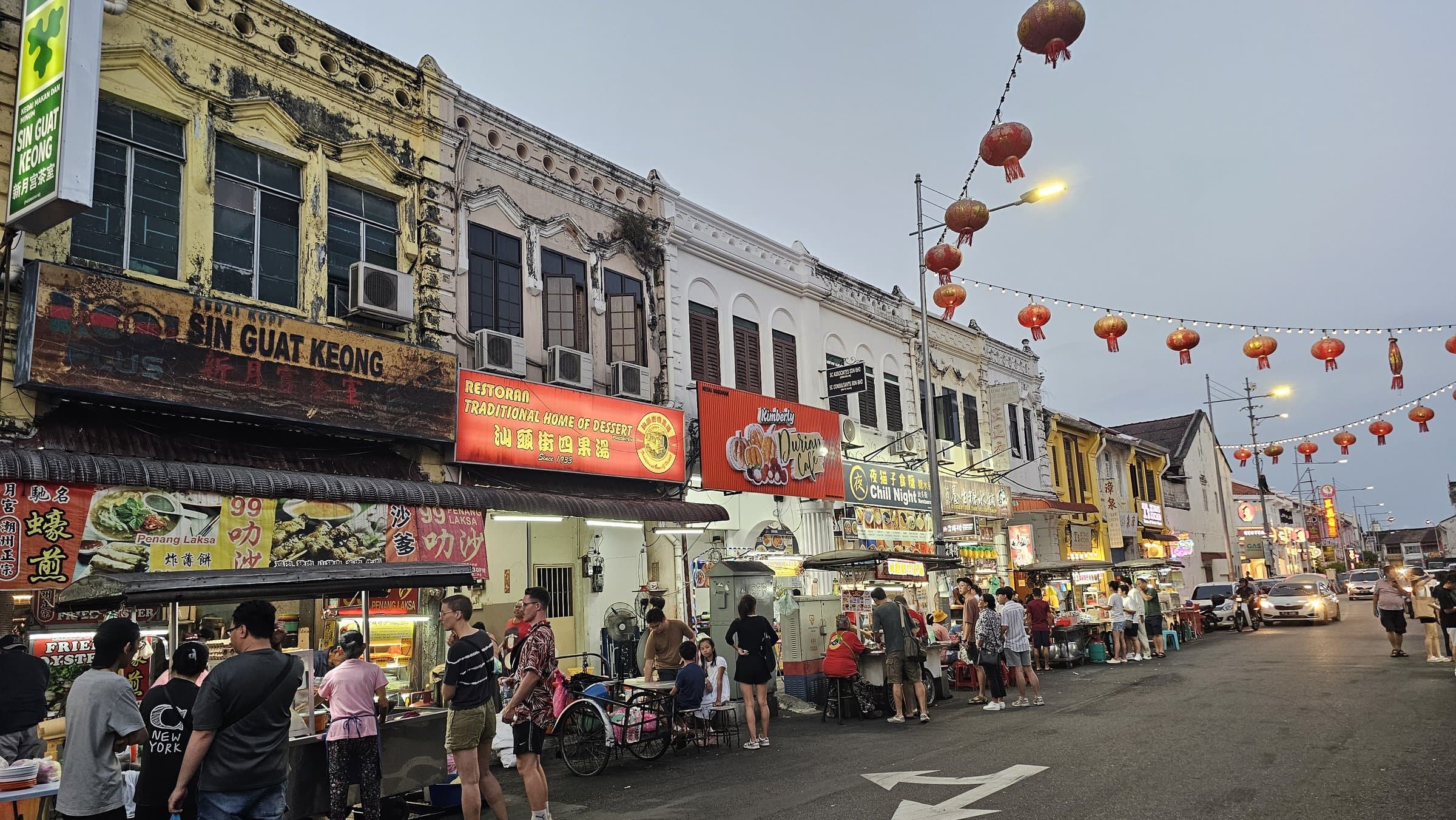
When in George Town, it's hard to say where Chinatown really is. The Chinese are the city's largest community, and it shows: in the shophouses, the temples, and the Chinese signage on almost every street. Three separate areas of George Town can be described as Chinatown: Old Chinatown, New Chinatown, and the Chinese Trades Neighbourhood (the Jetties), each developed at a different period in the city's history. Beyond these three, the Seven Streets Precinct and Armenian Street, within the Penang Heritage Enclave, are also predominantly Chinese neighbourhoods today.
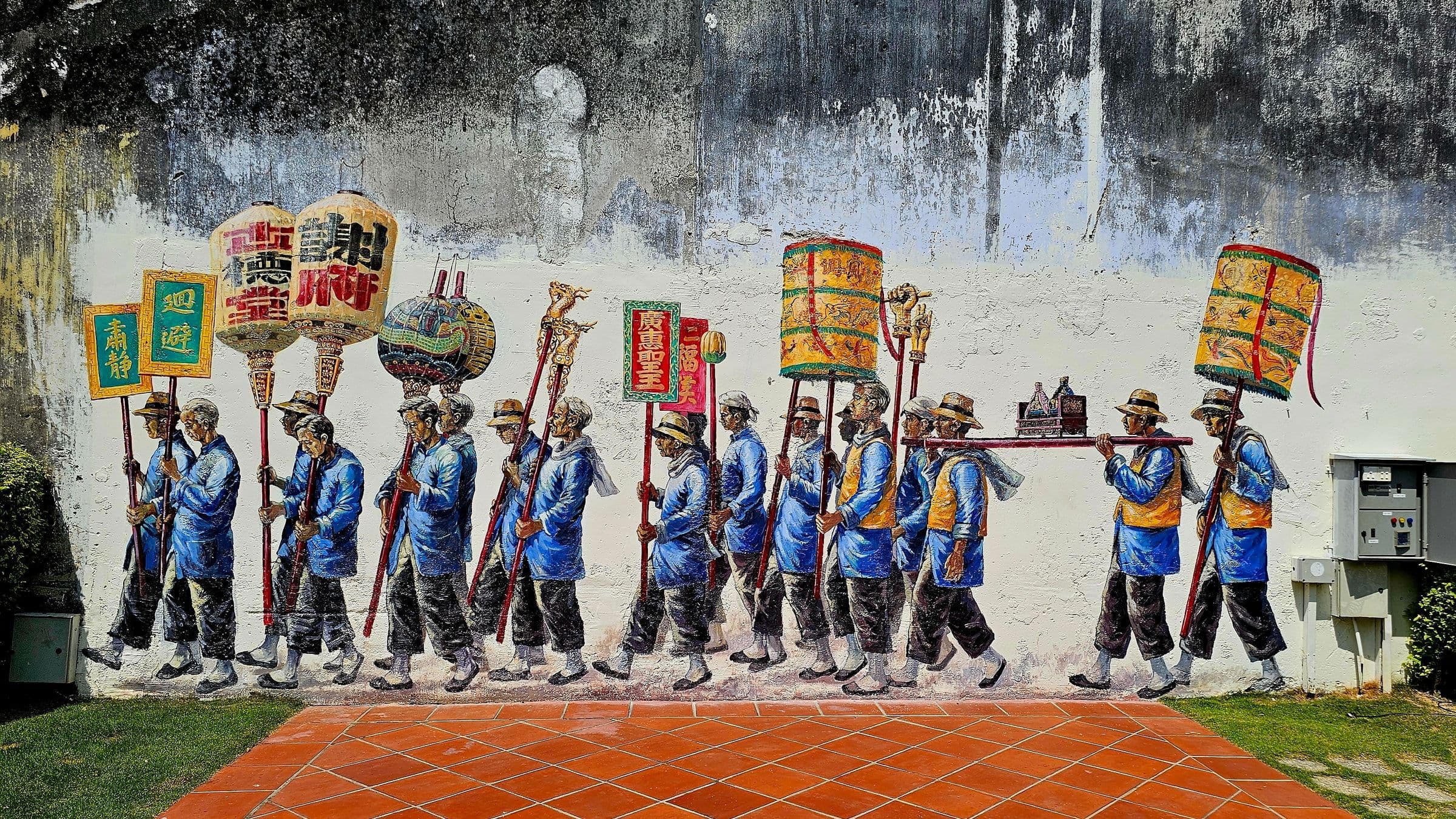
A Kongsi is a building where Chinese families sharing the same surname or clan come together to honour their ancestors, and George Town hosts several. The one to see is Leong San Tong Khoo Kongsi, finished in 1906 and the grandest clan temple in Malaysia, which you believe the moment you're standing in the courtyard looking up at the roof. It features intricately carved stone pillars, sculptures of mythical creatures such as dragons, and exquisite woodwork. There are others too (Cheah Kongsi, Yeoh Kongsi, Boon San Tong Khoo Kongsi and Eng Chuan Tong Tan Kongsi), but unless you're especially interested in clan houses, visiting one gives you the idea.
If you're choosing between the two, let your schedule decide. Khoo Kongsi fits neatly into a day you're already spending in George Town. Kek Lok Si takes more time to reach, but if you've got the morning free, the hillside setting makes the trip feel completely different.
Visit China House to explore their wide variety of cakes and perhaps indulge in a few. The tiramisu is a favourite, though we also enjoyed the pecan tart. It's pricey but worth it! Just across the street is Gerakbudaya, a bookstore with a superb collection of literature on Penang and Malaysia.
What to eat in Penang
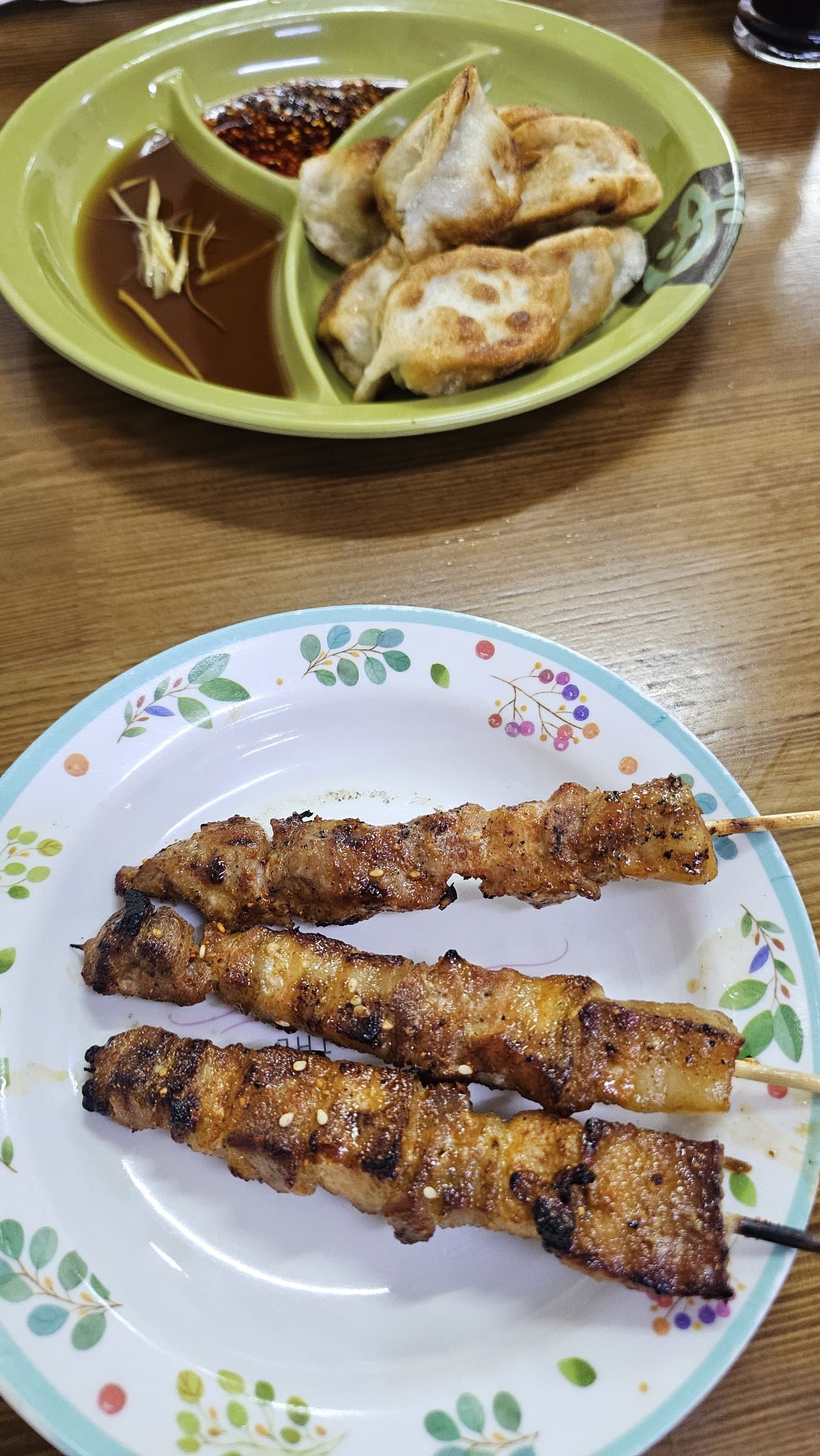
the real reason you're hereMalay, Indian and Chinese, all of it cooked on the same streets for two hundred years, and cheap enough that you can eat four times a day and barely notice. Here's the list:
smoky stir-fried flat rice noodles with prawns and sausage
tangy, spicy fish soup with tamarind and thick noodles
steamed rice topped with rich Indian-Muslim curries and sides
rice cooked in coconut milk, served with meat and cucumber
prawn-based broth with egg noodles, vermicelli, and shrimp
bread and curry dips, flipped paper-thin on a drum-hot griddle
similar to spring rolls
shaved-ice dessert with pandan jelly, coconut milk, and palm sugar
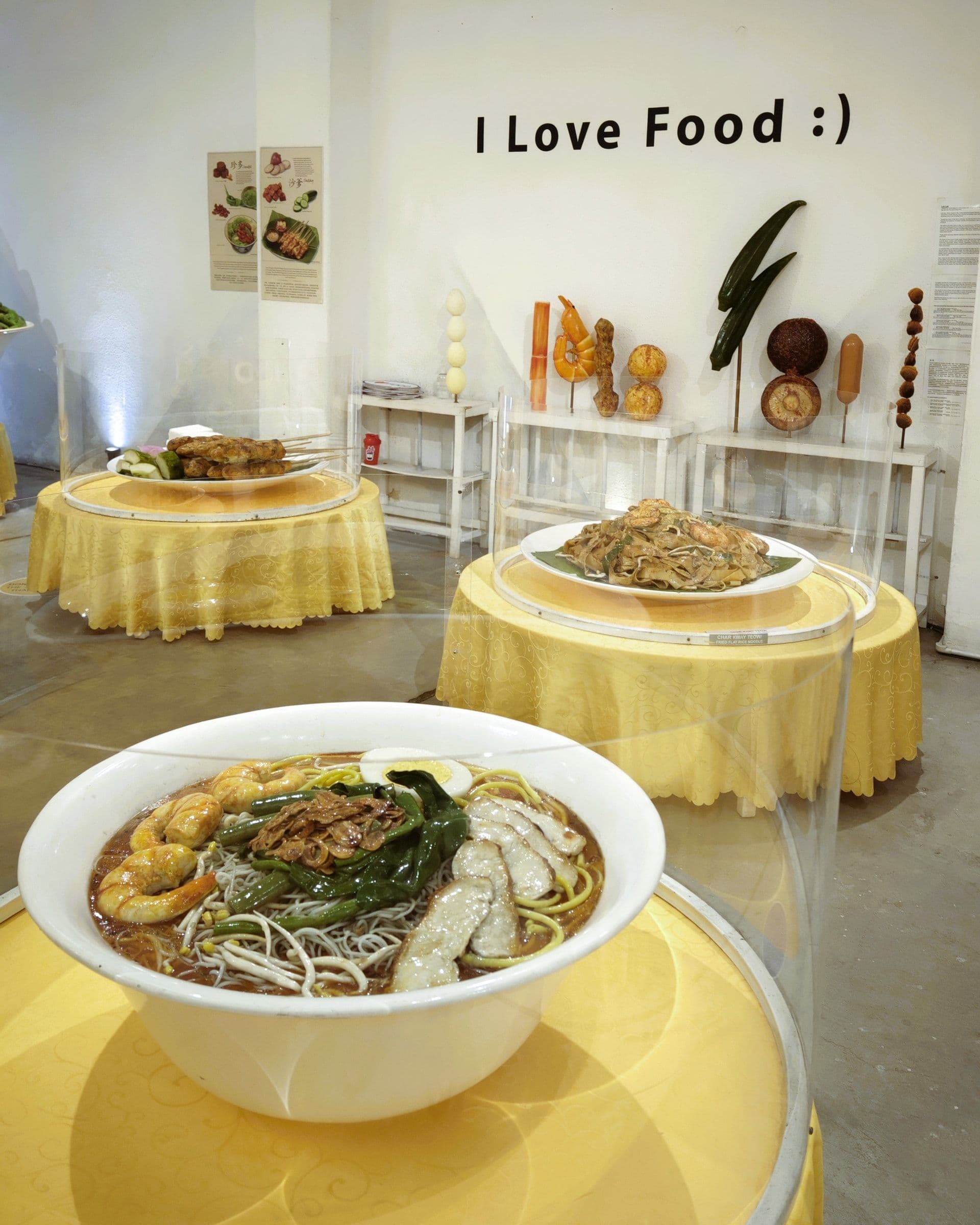
A couple of places worth seeking out:
- Lum Lai Duck Meat Koay Teow Th'ng — Cecil Street Market — my favourite bowl of soup in Penang, and a Michelin Bib Gourmand 2025 pick. The broth looks light, but it's packed with flavour from hours of simmering. A clear duck broth slow-simmered with pork bones, poured over flat rice noodles with duck, fishballs, fish cake, duck-blood jelly, fried garlic, and lard. Around RM 7.50 for a small bowl, RM 8.50 large, RM 13.50 loaded with extras.
- Penang Road Famous Laksa — A good choice if you're staying in George Town and not heading out to Air Itam. Famous for assam laksa, and easy to mix up with the nearby Penang Road Famous Teochew Chendul, which is a different stall entirely.
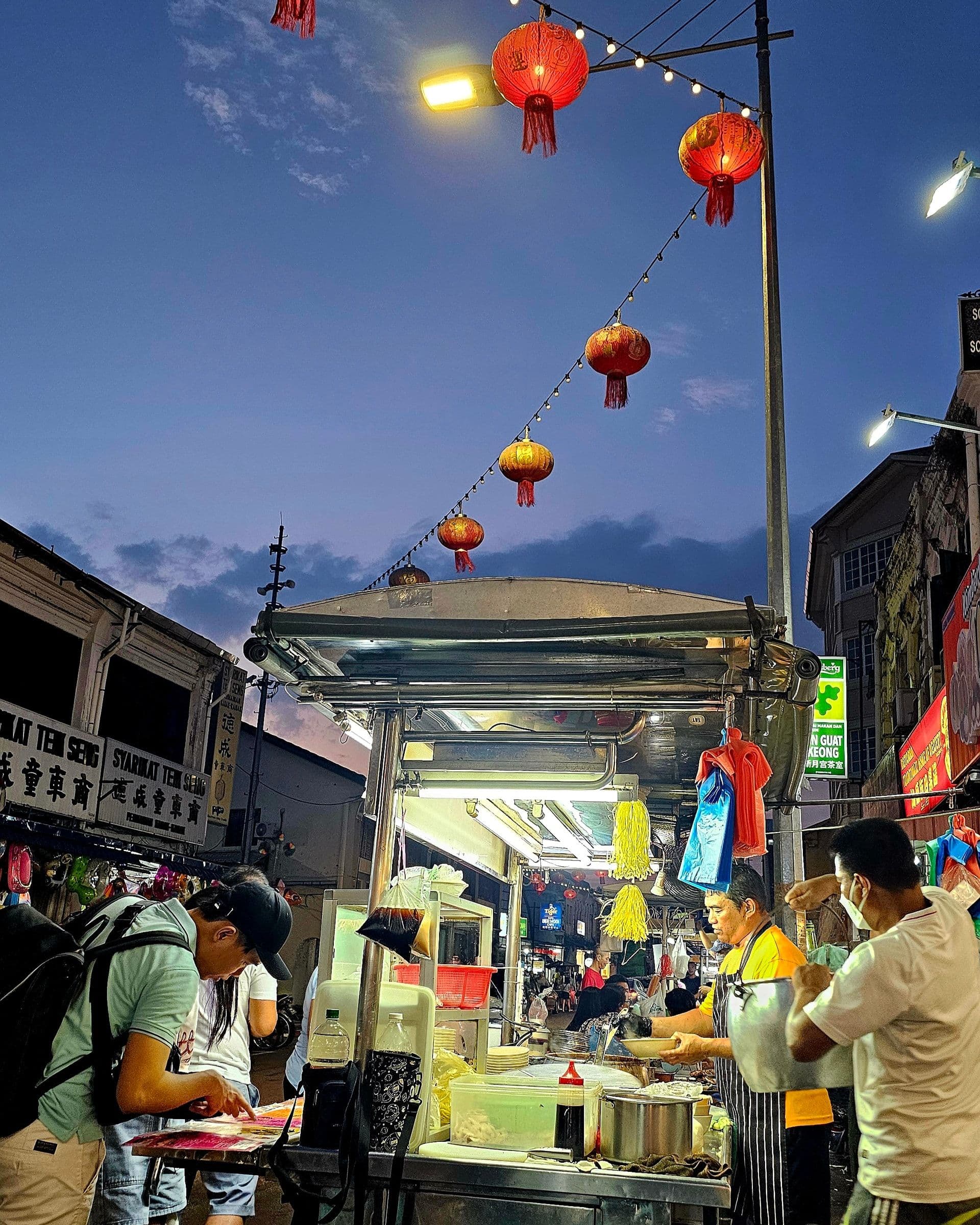
If you make me pick one thing from three days of eating: the char koay teow at Siam Road. It's the one I would go back for.
If the hawker sprawl feels like a lot to decode on your first evening, a guided food walk sorts it out fast: the George Town night food tour eats through teh tarik, char koay teow, and laksa with someone who already knows which stalls deserve the queue. After that, you'll happily hunt on your own.
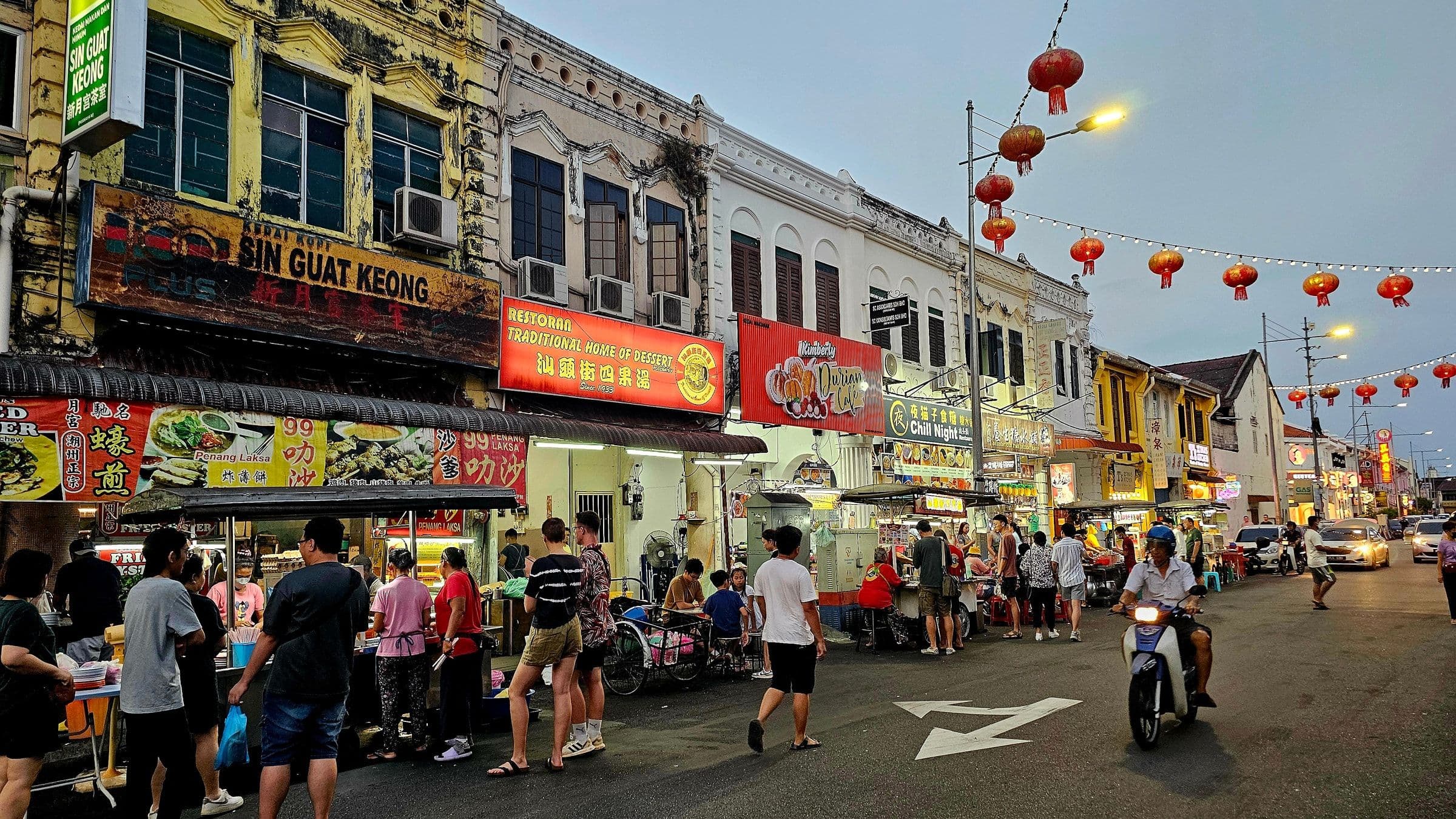
Where to eat in the evening. For a full hawker-centre dinner, try Gurney Drive, New Lane or the Kimberley Street night market. They start up around six or seven, but feel properly busy closer to eight.
More Time in Penang?
If you have extra days, here's what to add to the itinerary:
Three days is enough for George Town itself. If you want to see more of Penang Island, give yourself another week. Our full list of things to do in Penang covers the rest of the island, beaches and hill country included.
Where to stay in George Town?
pick your neighbourhood firstThe coolest place to stay in Penang has got to be the Blue Mansion, which was a set for a scene in Crazy Rich Asians and looks straight out of a magazine spread, very Instagrammable. Rooms go from €255 a night, and it's not always easy to book. Personally, I think there are better ways to spend that money. If you still want to experience the Blue Mansion, you can join one of their tours, have a drink at the bar, or dine at their restaurant.
Where to base yourself
This decision matters less than it sounds, because George Town is small. The four areas below are all within about a quarter of an hour's walk of one another, and one of the smartest heritage hotels in the city sits a couple of hundred metres from Little India. What really changes between them is how much noise you sleep through, how much you pay, and what you see when you open the front door.
The heritage core
for a first visitWe stayed in the heritage quarter and would again. That's one data point rather than a survey (we never slept anywhere else on the island), but everything on Days 1 and 2 was a walk from the door, and on a three-day trip that is most of the argument.
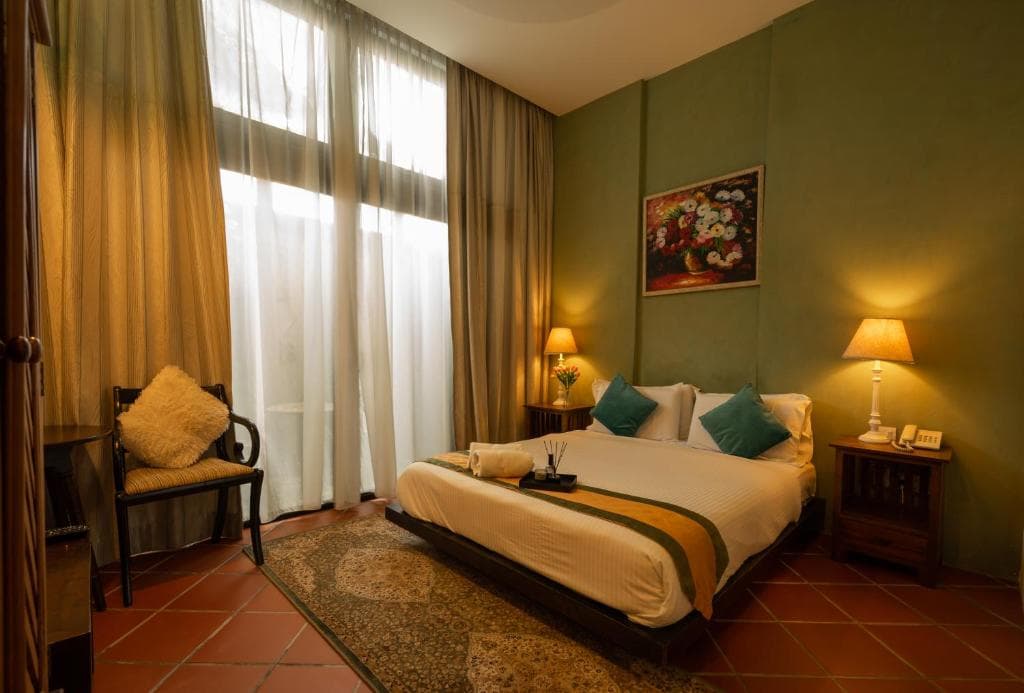
It's the version of George Town people come for: narrow streets of 19th-century shophouses, murals down the side alleys, temples that smell of incense from the pavement, and food within a minute of wherever you happen to be standing. It's also the busiest, and the one where you pay for the address. Rooms in the restored shophouses run €45–€120 a night, with the grander suites well above that.
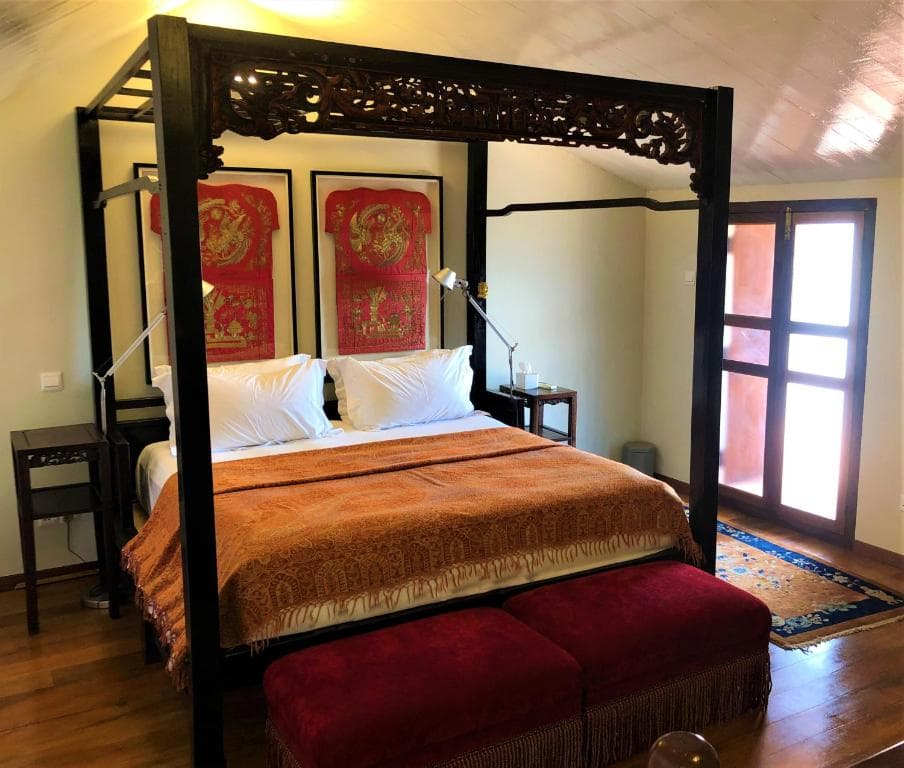
Spices Hotel is where we stayed, and it's the one I'd book again: a well-kept 19th-century shophouse in the middle of the UNESCO area, so you walk out of the door into the street art, the temples and the food, and never need a taxi for two days. Highly recommended. I will definitely be back!
If it's booked out, two others sit in the same few streets: The Prestige Hotel and Seven Terraces, both a step up in price.
Little India — the cheapest way to stay central
A few streets of sari shops, marigold garlands and sweet trays, with Bollywood playing over the top of it all. The quarter you walk through on Day 2 is also somewhere you can sleep, and it's the best value inside the heritage zone. It's loud in the best way during the day and quietens down earlier than you'd expect. Rooms sit around €25–€55, and you're still walking to everything.
The trade-off is that this is a working neighbourhood rather than a pretty one, so the streets outside your hotel are busy with deliveries and traffic rather than photogenic decay.
Three to start with, all inside those few streets: Victoria Garden Hotel for the comfortable middle of that band, and Georgetown Inn by Sky Hive or Red Inn Court at the cheaper end. There are plenty more hotels around Little India if none of those fit.
Chulia Street & Love Lane
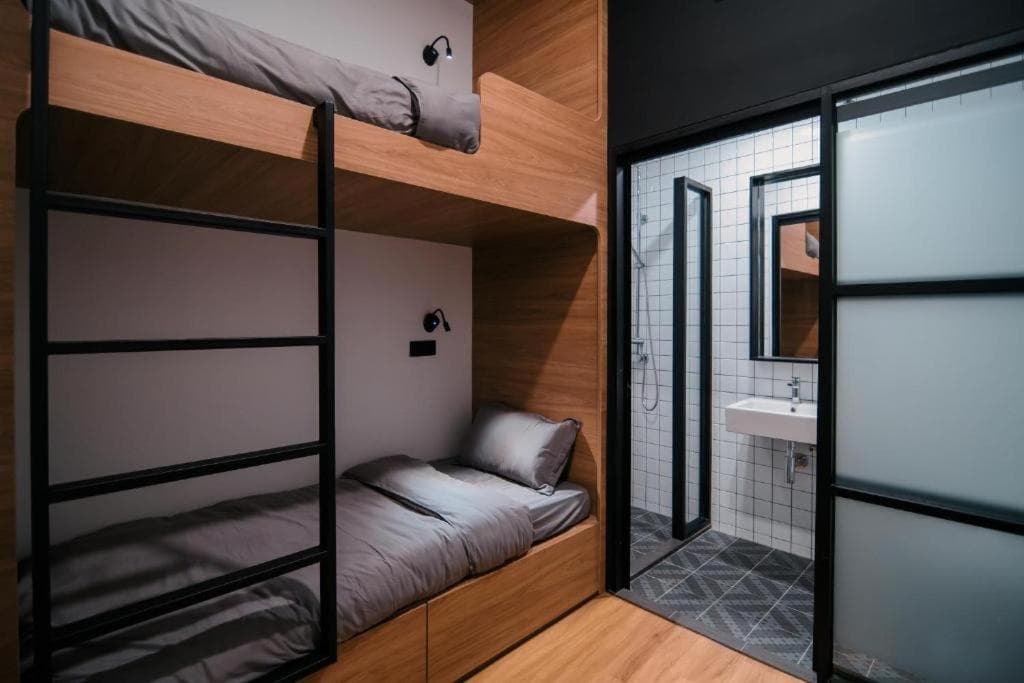
for going outThe backpacker spine of the city, and the place to be if you want the night to carry on after dinner: bars and cafés along Lebuh Chulia, hostels in shophouses down Love Lane, and dorm beds from about €12. Private rooms in the same buildings run to roughly €40.
It is noisy at night, which is the point for some people and the problem for others. If you want the location without the volume, Muntri Street runs parallel one block over and gets a fraction of the traffic.
For the beds themselves: Kooning for a private room, The Frame Guesthouse on Lebuh Chulia itself, and Reggae Penang Love Lane Hostel for the dorms.
Batu Ferringhi — for the beach and for kids
The resort strip on the north coast, half an hour or so from the old town, where the resorts have pools, kids' clubs and space to spread out. As we said above, it's better for the night market and the restaurants than for the beach itself, but on a humid afternoon with children, a pool beats a heritage walking tour, and Grab makes the trip back into town easy enough. Expect €45–€160 a night depending on which resort and which season.
Worth being honest about the cost: basing yourself out here means every sight in this guide becomes a drive, so it suits a longer, slower trip more than a three-day one.
Three of the big names on the strip: Golden Sands Resort, Shangri-La Rasa Sayang and Hard Rock Hotel Penang.
Best hotels
Search every George Town stay — dates & filters carry over.
How to reach George Town
plane, ferry, bridge, or busGeorge Town sits on Penang Island, and you can get there by every type of transport.
What 3 days in George Town costs
the honest mathGeorge Town is an easy place to travel on a budget. Meals are inexpensive, most of the sightseeing is on foot, and the biggest costs are the two mansions and Penang Hill. Per person, per day:
- Budget
- ~€30–40/day — hostel bed, hawker meals, walking + the odd Grab
- Mid-range
- ~€60–90/day — 3/4★ shophouse hotel, café breakfasts and hawker dinners, Grabs, all the entry tickets
- Luxury
- €150+/day — 5★ heritage hotel, restaurant meals, private guides
What Day 1 costs. Breakfast at Mugshot is the most expensive meal on this itinerary: a bagel and a coffee comes to RM 23–35, roughly what a whole day of hawker meals costs. The three Day 1 tickets add up to RM 70 between them, lunch and dinner at hawker stalls with drinks come to another RM 20–30, and getting around costs nothing at all because the whole day is walked. That puts Day 1 at roughly RM 115–140 per person, which makes it the priciest of the three days for the simple reason that it is the one with three tickets in it.
Across all three days the entry tickets (both mansions, the fort, the funicular, The Habitat, the pagoda, Khoo Kongsi) come to about RM 185–190 (≈ €37) per person, or close to RM 180 if you book The Habitat online. Days 1 and 2 cost very little to get around because they're mostly walking, with the free CAT shuttle there if you need it. Eat mostly at hawker stalls and the RM 20–30 food band above holds comfortably. It is the café breakfasts that push a day past it.
FAQ
the questions everyone asks1Are 3 days enough for George Town?
Three days are enough to see the main heritage sites: the mansions, street art, clan jetties, and the Penang Hill to Kek Lok Si route. Still, George Town is even better if you can stay longer. In a week, you can take day trips around the island, visit morning markets, and enjoy wandering the alleys or discovering a cosy bookshop. If you only have three days, the itinerary above will help you see the highlights without feeling rushed.
2What's the best area to stay in George Town?
The UNESCO heritage quarter, for a first visit; everything on Days 1 and 2 is walkable from it. Little India suits smaller budgets, Chulia Street and Love Lane are the nightlife picks, and Batu Ferringhi's beach works better for families with kids.
3How do you get around George Town without a car?
Walk for most of Days 1 and 2—the heritage core is compact. If it's too hot, hop on the free CAT shuttle, which runs every twenty minutes from 6 AM to midnight and serves most of the main sights. Day 3 is different, as Penang Hill and Kek Lok Si are outside the route, so a Grab is the easier choice.
4Is George Town walkable?
The heritage quarter is small and easy to explore on foot; most Day 1 and Day 2 attractions are a short walk or a quick Grab ride apart. For Day 3, Penang Hill and Kek Lok Si require transport, but the funicular handles the steepest section. Grab works well across the island for anything too far to walk.
5Do you need to pre-book anything in Penang?
The Blue Mansion tours run at fixed times (11 AM and 3:30 PM); book in advance if you plan to visit during peak times. For Penang Hill, whether the Fast Lane is worth it depends more on when you go than on the day itself. Early morning trains are usually quiet, but by late morning on busy weekends the queue can grow enough for the upgrade to make sense. No other major pre-booking is required for this itinerary.
6Do you need cash in George Town?
Mostly, yes. Kek Lok Si's pagoda and lift and Khoo Kongsi are cash only, and hawker stalls run on small notes, while Fort Cornwallis is card only and the Butterworth ferry gate is cashless. Carry both: small ringgit notes plus one card, and you're covered everywhere on this itinerary.
7Is George Town worth it in the rain, or in the haze?
Rain rarely costs you a day here — the showers come and go, and the two mansions, the Wonderfood Museum and a long afternoon over cake at China House all sit indoors. Haze is the one that can genuinely change a plan, because it flattens the view from Penang Hill. It's episodic rather than annual and tends to land in August and September, so check the air quality before you set the alarm for the 6:30 AM funicular, and swap the hill to another morning if it's bad.
Final Thoughts
If you're building a longer Penang trip, our guides to things to do in Penang and George Town's street art pick up where this one ends.
Three days is enough to get to know George Town a little. It also leaves you with enough unfinished plans to make coming back feel like the obvious next step. For more ideas, explore the rest of our Malaysia guides.